SkyShowtime is closing after losing €2.10 for every €1 it earned
Companies House accounts show the Comcast and Skydance joint venture lost €1.3bn against €616m of revenue, and the board has now set the end for late 2027.

Add up every set of accounts SkyShowtime has filed and the arithmetic of the Comcast and Skydance joint venture comes to €1.3bn of operating losses on €616m of revenue. For every euro a subscriber paid in, the company spent that euro and roughly €2.10 on top. Its board has now reached the conclusion the numbers were pointing at, telling staff on Wednesday that the service will close in late 2027.
The shutdown, reported by Deadline on Thursday, ends a five-year experiment in whether the territories Europe's streaming giants never bothered to brand could support a streamer of their own. Chief executive Monty Sarhan leaves after more than four years in charge. Chief financial officer Mark Neil stays on as interim general manager to oversee the wind-down, a job title that tells you most of what you need to know about his next two years.
The venture, and what it was for
SkyShowtime was set up by Comcast and the company then known as ViacomCBS, run out of Amsterdam, and switched on in September 2022. The logic was tidy. In the 22 European countries where neither parent ran a streaming service of its own (Spain, Poland, the Netherlands, Portugal, the Nordics and most of the Balkans among them), the venture pooled Paramount+, Peacock, Sky Studios and local originals into a single app rather than ask either side to build a subscale one alone. These were, as The Desk puts it, markets where premium American programming had mostly been handled by local pay-TV operators and public broadcasters, which made them cheap to enter and hard to win.
TheWrap dates the launch to 2021, and the confusion is instructive: the company was incorporated in November 2021, which is where its first accounts begin, but the service did not go live until ten months later. By the end of 2024 it employed just over 260 people and had reached nearly 10 million subscribers, a figure TheWrap sources to the UK filings. Spread across 22 markets, that is an average of about 450,000 paying customers per country. No single market could carry it alone.
What the accounts actually say
The filings, as cited by TheWrap, run like this:
- November 2021 to December 2022: €133.25m of revenue, a €190.09m operating loss
- 2023: €207.8m of revenue, a €561.95m loss
- 2024: €275.1m of revenue, a €543.7m loss
Revenue roughly doubled in two years. The losses barely moved. In 2023 the venture lost €2.70 for every euro it took in; by 2024 that had improved to €1.98, which is the kind of improvement that still ends with the lights off. Set the 2024 loss against those 10 million subscribers and the venture lost about €54 per subscriber over the year, after everything they paid.
Deadline puts the shareholders' total investment at more than $1bn, with no profit in any period. Five years is, by the standard of failed streamers, a decent run. Quibi lasted eight months. CNN+ got a month. SkyShowtime's problem was never speed of collapse but the absence of any route to the other side of the ledger, and a parent company will fund a bridge to somewhere far longer than it will fund a bridge to nowhere.
The real reason is in the parentage
The board's letter to staff blames the market, and it is not wrong. "Major global platforms have continued to expand their scale and invest heavily in content, technology and sport," it reads, before arriving at the sentence that matters: "the shareholders have determined that winding down the business is the most appropriate path forward."
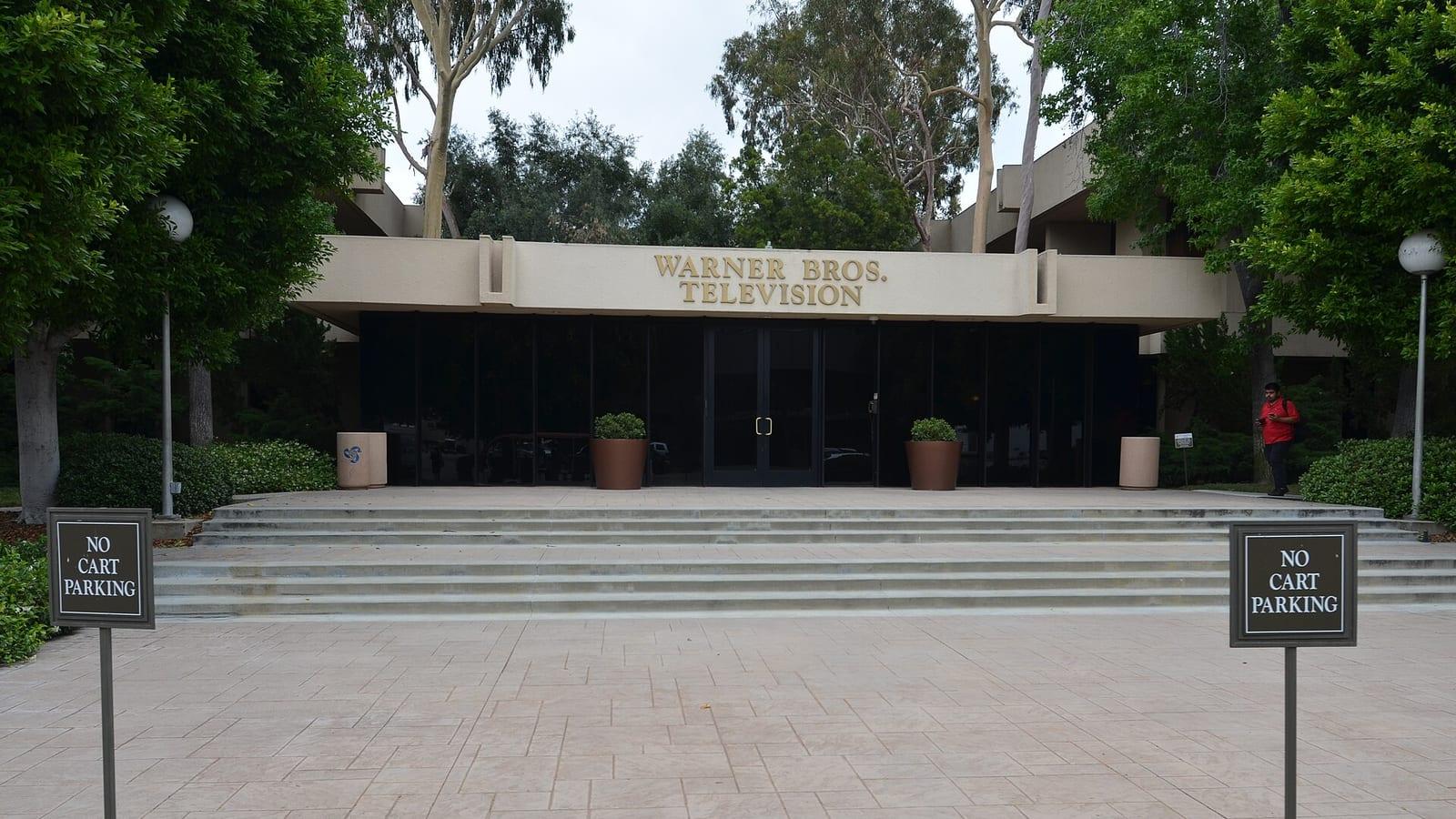
Look at who the shareholders are now, though. Skydance closed its $110bn merger with Warner Bros Discovery in October, the deal that has since folded Paramount's television studio into Warner Bros, and the combined company counts 203 million subscribers across HBO Max and Paramount+, per TheWrap. A company that size does not need a joint venture to reach Bucharest. Brussels is also actively prising the two parents apart: as a condition of EU approval, Paramount has 13 months to exit UIP, its theatrical distribution venture with Comcast's Universal, and is barred from co-distributing films with Universal in the EEA for ten years.
Comcast, for its part, is spinning NBCUniversal and Sky into a separately listed company next year, and Sky is midway through a £1.6bn bid for ITV's broadcast business that the CMA and Ofcom are still examining. Peacock's own numbers show a streamer that has only ever turned a profit in a World Cup quarter. A joint venture whose two parents both spent 2026 becoming different companies was always going to be unwound by somebody's lawyers; the accounts simply made the decision easy to explain.
What happens to the 10 million
Nothing, for now, is the official answer. The service "continues to operate as normal for our members", the board's letter says, and employee consultations, which began in October, will run country by country under local rules. Advanced Television notes that no details have been shared on where Paramount, NBCUniversal and Sky programming goes next in SkyShowtime's markets. "We thank Monty for his commitment and contributions to SkyShowtime's journey," the board added of Sarhan, which is the full extent of what anyone has said about the people running the place.
The sensible money is on HBO Max as heir. Skydance is already moving Paramount+ and HBO Max onto a single technical platform, with bundled pricing due in the United States next year, and 22 unserved European countries are an obvious place to point that machine once it works. Peacock is the longer shot; Comcast executives have resisted taking it outside the United States for years, though The Desk reports that position could soften once the NBCUniversal spin-off completes.
SkyShowtime stays on until late 2027. That gives its two parents about two years to decide which of their apps inherits 22 countries, and the NBCUniversal spin-off, due next year, gets the first say.
Reporting this piece draws on
The writer
Marcus Dey — Deals, development and the people who move between them, written for readers who want to know why a project exists at all.
More from Streaming

Regal and Cinemark won't put Fincher's Cliff Booth on their IMAX screens
The two largest IMAX operators after AMC, Regal and Cinemark, will not play David Fincher's The Further Mis-Adventures of Cliff Booth on their premium screens during its IMAX-exclusive run from November 25. The chains are protesting Netflix's short theatrical window: the Brad Pitt film reaches streaming on December 23, two weeks after it opens.
Paramount TV Studios folds into Warner Bros, fourth merger in 43 days
Skydance has now combined four pairs of divisions in the 43 days since the Warner Bros Discovery deal closed, roughly one every 11 days. The TV studios are the latest, and the pattern in what stays separate is the real story.

Joel Coen returns to Netflix, which gave his last film 8 days
Jack of Spades is the first film Netflix has announced buying in Peter Rice's seven days as chief content officer. The last Joel Coen film it released, The Ballad of Buster Scruggs, got eight days in four cities. The window this one gets will say what the new regime means by theatrical.