Cinema United's $1.2bn of cinema upgrades is $36,000 a screen
The trade body's two-year total of $2.7bn is up front; the 20 per cent fall in annual spending, concentrated almost entirely on the smaller circuits, is not.
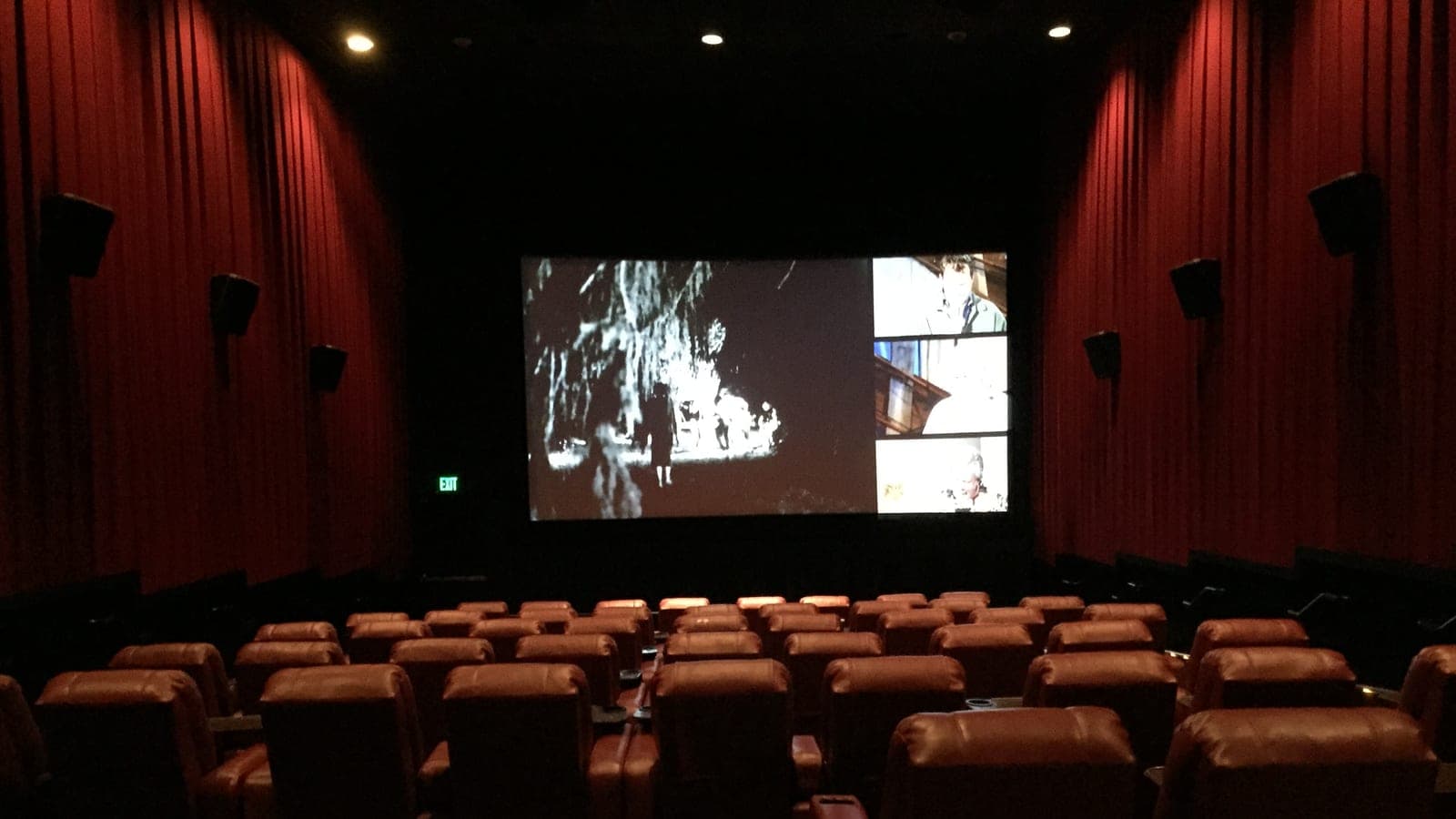
Cinema United represents more than 33,000 screens in the United States and Canada. Its members put $1.2bn into those cinemas over the past 12 months. That is about $36,000 a screen, and the association's own report prices a new sound system for a single auditorium at an average of $58,000.
The trade body released the figure on Thursday, at the close of its autumn summit in Los Angeles, inside a headline total of $2.7bn over two years. "When a theatre reinvests in itself, everyone wins," said Michael O'Leary, the association's president and chief executive, in the announcement. Variety and Screen International both led on the $2.7bn.
That is the number that travelled. The year behind it is more interesting.
$1.5bn, then $1.2bn
Cinema United's September 2025 report, still on its website, put the preceding 12 months at more than $1.5bn, including $920m from the eight largest circuits in the United States and Canada. This year the same two figures are $1.2bn and $840m. Industry reinvestment fell by $300m, a drop of 20 per cent.
It fell in the best summer North American cinemas have ever had. Takings between 1 May and Labor Day on 7 September reached $4.76bn, past the $4.755bn of 2013, Deadline reported. Screen put the summer slightly higher, at $4.77bn.
The record is thinner than it looks. Because Labor Day landed late, the 2026 season ran 130 days against 123 in 2013, a detail Deadline noted. Divide the totals by the days and summer 2026 averaged $36.6m a day, where 2013 averaged $38.7m. Per day of release, the biggest summer in history was 5 per cent behind the one it beat, before anyone adjusts for 13 years of ticket prices.
So the money coming in set a record by a rounding error, and the money going back out dropped by a fifth. One of those facts came with a press release.
The $300m came off the small circuits
Both reports break out the eight biggest chains, which makes the rest of the industry subtractable.
In the 12 months to September 2025, every exhibitor outside AMC, Regal, Cinemark, Cineplex, Marcus, B&B, Harkins and Santikos invested $580m. In the 12 months since, they invested $360m. That is a fall of 38 per cent, against 8.7 per cent at the top. The eight largest circuits now account for 70 per cent of all reinvestment in North American cinemas, up from 61 per cent.
Per screen, it reads as a two-tier estate. Those eight circuits ran more than 21,000 screens and 67 per cent of the box office when they announced their spending pledge in September 2024, as CNN reported. Their $840m across 21,000 screens works out at $40,000 a screen. The remaining 12,000 or so screens shared $360m, which is $30,000 each.
Ten thousand dollars is a small gap in dollars and a large one in practice. A circuit that can raise debt against 400 sites is a different business from a four-screen operator in a town of 20,000 people, deciding whether to re-seat one auditorium this year or next.
A pledge that is nearly paid off
On 19 September 2024 those eight circuits pledged more than $2.2bn over three years, for laser projection, immersive sound, seating, food and air conditioning. Two years in, they have reported $920m and $840m: about $1.76bn.
That leaves roughly $440m for the third year, a little over half of what they spent in each of the first two. Last year's report said exhibitors were "making good on their promise to invest". They were. The consequence is that the promise is now close to discharged, with the cheapest year of it still to come. Pledges reward arithmetic, which is also what we found when we checked Paramount's promise of 30 films a year against what it actually releases.
J. Sperling Reich, who read the same report for Celluloid Junkie, makes the fair objection: capital spending is lumpy, and no circuit re-seats the same auditorium two years running. That holds for one chain. It is harder to stretch across an entire industry in a record year.
The totals need one more caveat, and it comes from Cinema United itself. The 2025 edition footnoted its number as an aggregate of "chain and location-specific data provided" by members. These are sums of what companies chose to report, not a census of the estate. Read them as a floor.
What $1.2bn bought
Cinemark added 21 premium large-format auditoriums in the first half of 2026, seven XD, 12 ScreenX and two IMAX, along with 112 D-BOX motion-seat rooms; it says 72 per cent of its auditoriums now have recliners and 60 per cent of its sites serve alcohol. Harkins, whose chief executive Mike Bowers chairs Cinema United, spends more than $30m a year across 33 cinemas, or about $900,000 a site, and has added 13 CinéXL auditoriums and four CinéBar locations. Megaplex opened a cinema with bowling, an arcade and private event space in Downtown Daybreak, South Jordan, Utah.
That list is the report's best argument. It is also the measure of the problem, because every project in it is real, named and at a specific address, and the association counts 33,000 screens.
Harkins is worth a second look, because its 33 cinemas have not played an A24 release since the summer row over rental terms, a dispute we put at $19.75m on Backrooms alone. A circuit spending $30m a year on recliners and bars is also a circuit arguing over ten percentage points of the ticket. Both facts come out of the same squeeze.
A year ago Cinema United put the global premium large-format total at nearly 6,000 screens, with more than 200 added since 2023. Whether that has moved is hard to check from outside: the link to the full 2026 report on the association's own announcement page returned a 404 on Friday morning, so the detail behind the $1.2bn has stayed with the people who were in the room in Los Angeles.
Domestic box office stands at about $7bn, with a $10.5bn year projected, TheWrap reported. That puts $3.5bn in the final quarter, starting with Street Fighter on 16 October. The third year of the $2.2bn pledge closes next September, and the accounting on it arrives with the next report.
Reporting this piece draws on
- Cinema United North American Theatre Owners Have Reinvested $2.7 Billion In Their Cinemas Over The Past Two Years
- Cinema United September 2025 Cinema Investment Report (PDF)
- Screen International North American exhibitors invested $1.2bn in upgrades in past year, Cinema United says
- Variety Theaters Re-Invest $2.7 Billion to Bring In Moviegoers With Heated Reclining Seats, Full-Service Bars, Immersive Sound and More
- Celluloid Junkie Cinema Owners Have Invested $2.7 Billion in Theatres. What Is That Money Buying?
- TheWrap Movie Theaters Invested $2.7 Billion in Refurbishments Over Past 2 Years, Cinema United Report Says
- Deadline Box Office: How Summer 2026 Hit a Record $4.76 Billion in U.S.
- Variety Summer Box Office Breaks All-Time Record With $4.67 Billion
- CNN Major movie theater chains unveil a $2.2 billion makeover plan
- Screen International Cinema United report says North American exhibitors invested $1.5bn in past year
The writer
Nell Fairweather — The lead news file and the weekly column: studio decisions, the numbers underneath them, and what they cost the people who have to live with them.
More from News

Zendaya's new Alex Garland film is his third since he quit directing
Alex Garland has announced his retirement from directing twice on the record, in 2022 and 2024. Since the second statement he has directed Warfare, taken on A24's most expensive film ever, and now signed Zendaya for an untitled sci-fi shooting in 2027.

Canal+ VAT rise would cost €200m a year. Its film deal is €196m
Canal+'s July accord commits €196m a year to French and European film from 2028. The draft 2027 budget's VAT rise costs it up to €200m a year, and triggers the clause that voids the whole deal.

Sky's £1.6bn ITV takeover is Nandy's second media warning in 107 days
Lisa Nandy's 'minded to intervene' letter on Sky and ITV comes 107 days after the one she sent Paramount. Laid next to three earlier Sky cases, the dates show which kind of review this is likely to be.