Minotaur is France's third Oscar entry running that isn't in French
The Cannes Grand Prix winner is in Russian, made by a director who quit Russia's own Oscar committee in 2022, and France has not won this category since 1993.
France has won the Oscar for international feature twelve times, more than any other country has managed. Its last win was Indochine, at the ceremony in March 1993.
Thirty-three entries have gone to the Academy since. Twelve of them were nominated. None won.
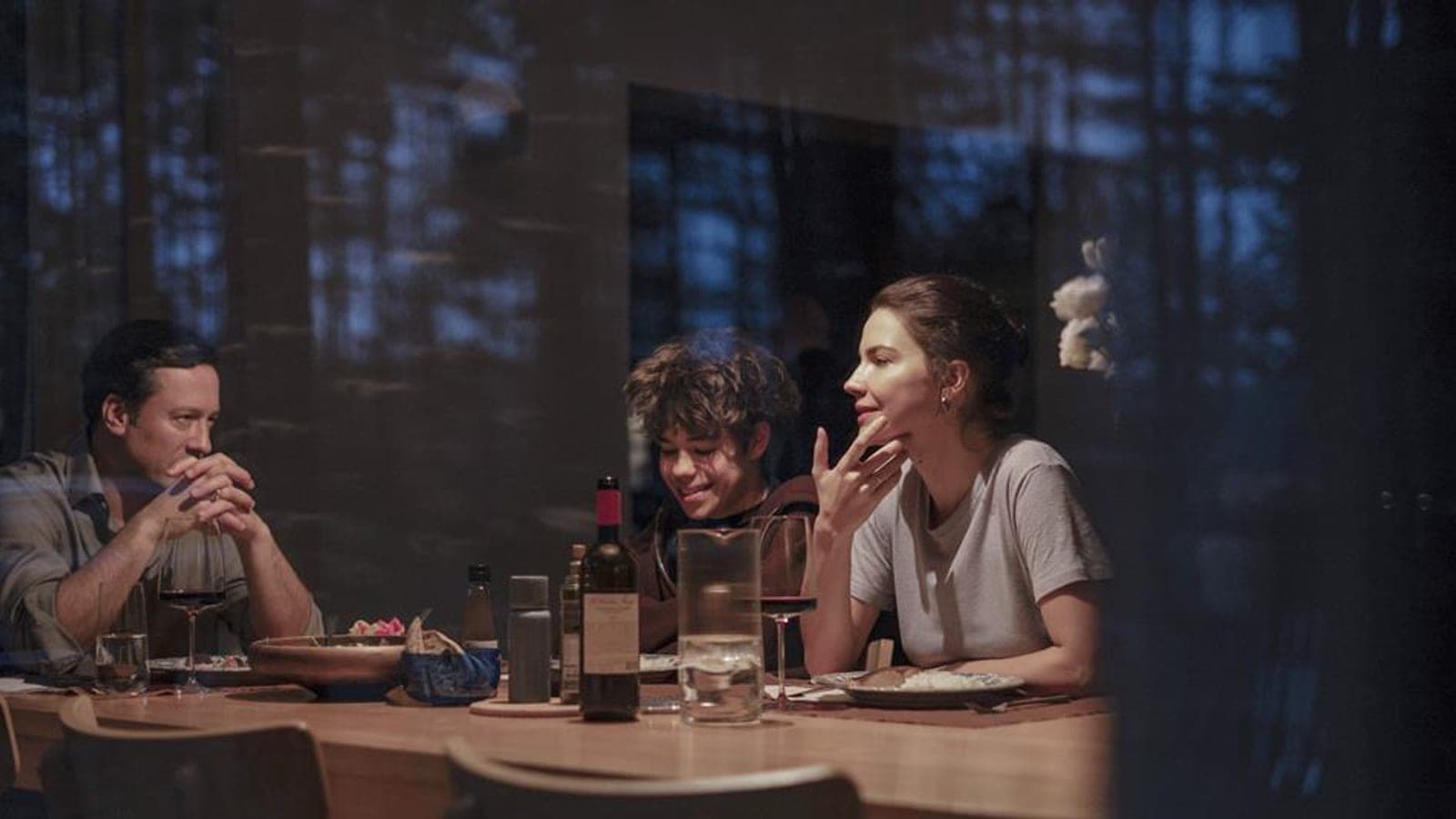
On 16 September the committee that picks France's candidate chose Minotaur, Andrey Zvyagintsev's Cannes Grand Prix winner: a film in Russian, set in a Russian provincial town in 2022, by a director who walked out of Russia's own Oscar committee four years ago. That makes 34.
The 11-member panel, chaired by the former Cannes Critics' Week artistic director Charles Tesson, took it from a final five that also held Arthur Harari's The Unknown, Marine Atlan's La Gradiva, Louis Clichy's animated Iron Boy and Antonin Baudry's De Gaulle: Résistance, Screen reported. Harari co-wrote Anatomy of a Fall, which matters later.
Three years, three languages, none of them French
The last film France sent to this category in French was Tran Anh Hung's The Taste of Things, in 2023. Since then: Jacques Audiard's Emilia Pérez, in Spanish, nominated and beaten; Jafar Panahi's It Was Just an Accident, in Persian, nominated and beaten by Norway's Sentimental Value on 15 March this year; and now a Russian film with a budget of $7.5m.
That is a strategy, whether or not anyone at the Centre National du Cinéma would use the word. France's single slot has become the way into the category for directors whose own countries will not send them, or cannot. CNC president Gaëtan Bruel was blunt about the reasoning to Screen: "The goal is to win."
It has not worked yet. Two entries, two nominations, two losses.
Russia has not entered the category since 2021
Russia's last submission was Kira Kovalenko's Unclenching the Fists, for the 94th Academy Awards. In September 2022 the Russian film academy decided against submitting anything at all; the chair of its Oscar committee, the director Pavel Chukhray, resigned and called the decision unfair and illegal, and several members went with him. Variety and Deadline both named Zvyagintsev among them.
Five submission cycles have now passed with no Russian entry. Zvyagintsev had delivered two of the country's nominations in that category, for Leviathan in 2015 and Loveless in 2018. He lives in France, Euronews reported this week. Accepting the Grand Prix in May, he said "the only person who can put an end to this bloodshed is the president of the Russian Federation", a formulation that named neither Russia nor Ukraine and drew criticism from Ukrainian viewers and from anti-war Russian exiles, according to the same report.
The sequence, then: nominated twice under the Russian flag, out of the Russian committee in September 2022, submitted by France in September 2026.
The Academy built a side door and this film does not fit through it
For the 99th Oscars the Academy rewrote the category. A non-English-language film can now qualify by winning a top prize at one of six festivals instead of waiting on a national committee, and the film itself is credited as the nominee, with the director accepting on behalf of the creative team, per the Academy's rules announcement. The qualifying prizes are Berlin's Golden Bear, Busan's Best Film award, the Palme d'Or, Sundance's World Cinema Grand Jury Prize, Toronto's Platform award and Venice's Golden Lion.
Minotaur won the Grand Prix. The Grand Prix is not on the list.
That reform was written for films caught by political selection, and the first obvious test of it fell straight through. Without France there was no route in. The Palme went to Cristian Mungiu's Fjord, which Romania has submitted through the ordinary channel anyway, so the new door has yet to be used by anyone who needed it.
Three films with no home language
Sixty-four countries have filed so far. Three of those entries carry no dialogue in an official or majority language of the country sending them: Australia's First Light, in Filipino; Switzerland's Who Is Still Alive, in Arabic; and Minotaur. It is also the only entry so far filed wholly in Russian, in a year when Lithuania's How to Divorce During the War uses Russian and Ukrainian alongside Lithuanian.
Elsewhere the festivals have done the sorting, as they usually do. South Korea has gone with Lee Chang-dong's Possible Love, which had the best reviews of Venice. Spain sent La bola negra, from Javier Calvo and Javier Ambrossi, who shared the director prize at Cannes.
What happened the last time this committee got it wrong
In 2023 the French panel passed over the Palme d'Or winner Anatomy of a Fall and sent The Taste of Things. Justine Triet's film went on to five nominations, including best picture, and won original screenplay. The French entry won nothing at all. Variety reported that the vote had split 4-3, and that a member who had backed The Taste of Things asked for a second ballot and was refused.
France enlarged the panel from seven members to eleven the year after, to make that harder to repeat.
The bigger committee has now produced three consecutive entries built on a festival prize and a director the Academy already recognises. It is a better-run operation than the one that lost Anatomy of a Fall, and it is picking good films. It has still won nothing. Thirty-three years is a long time to be the most decorated country in a category.
Submissions close on 30 September. Preliminary voting runs from 7 to 11 December, nominations are announced on 21 January 2027, and the ceremony is at the Dolby Theatre on 14 March, a night The Odyssey is expected to dominate and the first at which this statuette goes to a film rather than to a country. Minotaur opens in French cinemas on 14 October through Les Films du Losange, almost eight weeks before Academy members start voting.
Reporting this piece draws on
- Screen Daily France sends Andrey Zvyagintsev's 'Minotaur' to 2027 international Oscar race
- Euronews France picks Russian-language film 'Minotaur' as its choice for 2027 Oscar glory
- Academy of Motion Picture Arts and Sciences Awards rules and campaign promotional regulations approved for 99th Oscars
- Variety Russia Boycotts Academy Awards, Set to Forgo Oscar Submission, Several Members of Russian Committee Resign
- Deadline Oscars: Russia Will Not Submit Film For International Feature Race; Local Selection Committee Chair Resigns In Protest
- Variety Anatomy of a Fail: Inside France's Dysfunctional Oscar Committee
- France 24 Palme d'Or winner 'Anatomy of a Fall' earns Oscars revenge after French snub
- Festival de Cannes The 79th Festival de Cannes winners' list
- Wikipedia List of submissions to the 99th Academy Awards for Best International Feature Film
The writer
Priya Raman — Awards and festivals treated as a campaign beat: strategy, precursor maths, voting bodies and money, from first screening to final ballot.
More from Awards
Oscars 2027 festival route adds three films countries passed over
The Academy's first change to how films reach the international feature Oscar in seventy years let in Yellow Letters, Shame and Money and Angh. The other three festival winners were going to be there anyway. Submissions closed on 30 September.

Fjord is Romania's 42nd Oscar entry. The first 41 got one nomination
Romania has submitted 42 films to the international feature Oscar since 1966 and been nominated once. Entries close on Wednesday, and Fjord is going in without the corrective the Academy built for Mungiu's last Palme d'Or.

Red Sea Film Festival skips a year, and $597,500 of prizes with it
Add up the cash on the festival's own 2025 prize lists and it comes to $597,500, decided in a single week in Al-Balad. The Red Sea Film Foundation has cancelled this December's edition and will not return until Q4 2027.