Primetime beat Mickey 17's opening day on an eighth of the budget
Robert Pattinson's Chris Hansen film took $8.49m on Friday from 2,874 sites, 46% more per screen than his $118m Bong Joon-ho picture managed in 2025.
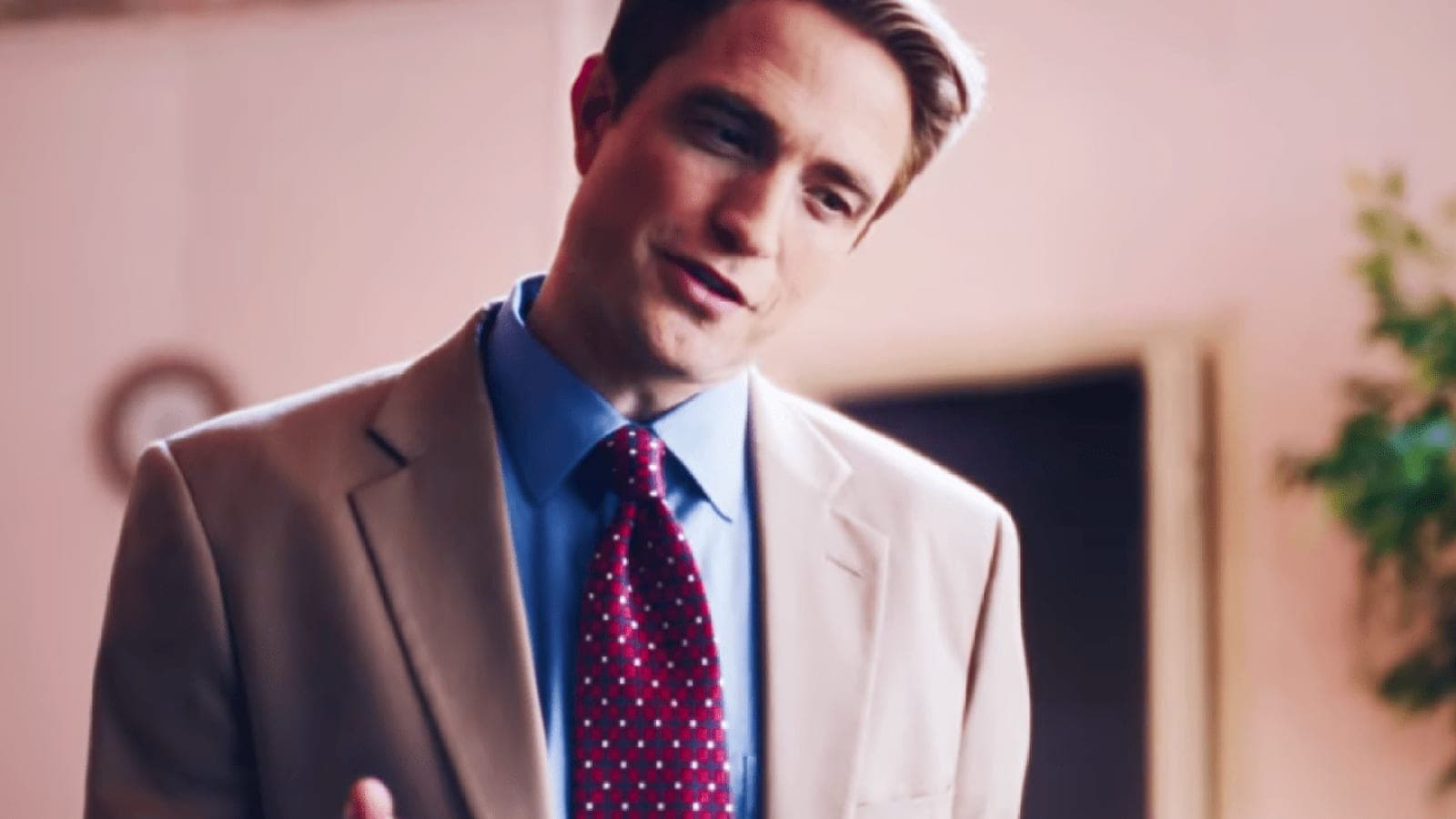
Primetime took $8,494,586 on Friday from 2,874 sites, according to The Numbers' daily chart. The last Robert Pattinson film to open wide, Mickey 17, took $7.7m on its first day from 3,807 locations in March 2025, Variety reported at the time. One of those films cost a reported $15m. The other cost $118m.
Run it per screen and the gap stops being marginal. Primetime averaged $2,956 a site on opening day against $2,023 for Mickey 17, a difference of 46%, and it did it in 933 fewer cinemas. Pattinson's cheapest lead role in years is playing to fuller rooms than his most expensive one.
The film is Lance Oppenheim's first narrative feature, written by Ajon Singh, with Pattinson as the Dateline NBC presenter Chris Hansen and a cast including Merritt Wever, Skyler Gisondo, Alex Winter and Anna Faris. It premiered in competition at Venice on 5 September and left the Lido without a prize, in a year when the Golden Lion race came down to a Gaza documentary and a Martin McDonagh comedy. It holds 87% from 180 critics on Rotten Tomatoes and 67 on Metacritic. CinemaScore graded it a B.
What Friday's chart actually says
Avengers: Endgame Encore led the day with $11.2m from 3,060 sites, a per-screen average of $3,660, as Variety reported. We wrote on Saturday about how small that re-release number is against the 2019 original. It is still the biggest number on the board.
Third was David Ayer's Heart of the Beast, with Brad Pitt and J.K. Simmons, on $7.45m from 3,435 sites. That is $2,169 a screen. Primetime beat it by 36% per screen from 561 fewer cinemas, and Heart of the Beast cost $82m to make against Primetime's $15m.
Fourth was Resident Evil on $6.9m in its second weekend, after an opening that was nearly half front-loaded into Thursday and Friday.
Here is the comparison the trades have not printed. Measured against the money spent making them, day one returned 57 cents of every production dollar for Primetime, 9 cents for Heart of the Beast and, back in March 2025, 6.5 cents for Mickey 17. Those are not marketing-adjusted figures and nobody should read them as profit. They are a blunt measure of how much film a studio bought for what it spent, and on that measure A24 bought about six times more than Warner Bros did with Bong Joon-ho.
The part that should worry the majors
Weekend projections put Primetime at $19m to $20.5m, with Deadline reporting that four films are eyeing $20m or more. At the bottom of that range the film has out-grossed its negative cost in three days.
That is not the same as being in profit, and the distinction matters. Cinemas keep roughly half of a domestic ticket, and the $15m figure covers production, not prints and advertising. A24 has spent this year pressing exhibitors for a larger slice of the gross anyway, as we reported when the company asked for an extra ten points on Backrooms.
Compare the position Mickey 17 was in on the same Sunday of its run. Variety, citing rival executives, put its global break-even at $275m to $300m against a $19.1m domestic opening and $118m of production spend plus a reported $80m in marketing. Primetime needs a fraction of that. Same actor, eighteen months apart.
This is A24's second reminder of the point this year. Backrooms, made for about $10m by the 20-year-old YouTube director Kane Parsons, opened to $81m in the United States in May and became the studio's biggest release, per Deadline. Two of the year's most efficient wide releases came from a company that used to be shorthand for arthouse.
Hansen bought the room
The other reason people are searching for this film is the man it is about, and he has not been quiet. Hansen said in August that he turned up to a screening and left without seeing the film, telling The Hollywood Reporter that "the lawyers at A24 wanted me to sign away my rights to my name, image and brand essentially, as well as any potential legal rights that would come out of the movie". A24 disputes that account. A source for the studio told Deadline that he was asked to sign the standard non-disclosure agreement used at preview screenings, which did not require him to waive anything of the sort. Hansen has said he is considering legal options.
Then he did something cleverer than a lawsuit. Hansen bought the preshow advertising slot in front of every screening of Primetime for at least its first four weeks, The Hollywood Reporter reported, running a spot that delivers his catchphrase and a QR code pointing at TruBlu, his true-crime streaming network. Every ticket A24 sells now sends a viewer to Hansen's landing page first.
He has reviewed the film too, giving Pattinson's performance a D and calling it detached from reality. A subject who publicly grades the actor playing him is not a problem for an A24 marketing department. It is free press with a face on it.
The studio's own campaign leaned on creator screenings rather than the traditional critics' circuit, which makes the 87% review score slightly awkward for everyone involved. The critics liked it anyway.
What happens next
Thursday previews were $2.7m of Friday's total, Variety reported, which works out at 32% of the day. Avengers: Endgame Encore was at 34%, on $3.8m of previews, and Heart of the Beast at 24%, on $1.8m. A re-release front-loads because the people who want it have already decided. A Brad Pitt survival drama with a dog does not, because its audience turns up at the weekend. Primetime is behaving much more like the re-release than like the Pitt film, which is what a provocation usually does.
A B from CinemaScore is the number to watch rather than the opening. Films that provoke tend to front-load, and Primetime is competing next weekend against holdovers rather than a fresh wide release, which is the kind of gap that separates a $50m run from a $35m one.
Final weekend estimates land on Sunday afternoon in Los Angeles and actuals on Monday. Hansen's advertising runs until late October, whatever the film makes.
Reporting this piece draws on
- The Numbers Daily Domestic Box Office Chart for Friday, September 25, 2026
- Variety Box Office: 'Avengers: Endgame Encore' Leads With $11.2 Million on Friday as A24's 'Primetime' Takes Second
- Variety Box Office: 'Avengers: Endgame Encore' Makes $3.8 Million in Previews, Robert Pattinson's 'Primetime' at $2.7 Million
- Deadline Box Office: 'Avengers Endgame' Leads Weekend Where Four Films Eye $20M+ Each
- Variety Box Office: Robert Pattinson's 'Mickey 17' Gets $7.7 Million Opening Day
- Variety 'Mickey 17' Box Office Opening Weekend: Film Struggles Against Big Budget
- The Hollywood Reporter Chris Hansen Didn't Watch 'Primetime' Screening Because "A24 Wanted Me to Sign Away My Rights"
- Deadline Chris Hansen Was Not Asked To "Sign Away" Rights At 'Primetime' Screening
- The Hollywood Reporter Chris Hansen Buys Ads Before Every Screening of A24's 'Primetime' (Exclusive)
- Deadline Box Office: 'Backrooms' $81M U.S, $118M WW Opening Is An A24 Record
- IndieWire A24's 'Primetime' Earns $2.7 Million in Previews as Robert Pattinson's Creepy Chris Hansen Scores at the Box Office
The writer
Nell Fairweather — The lead news file and the weekly column: studio decisions, the numbers underneath them, and what they cost the people who have to live with them.
More from Box Office
Street Fighter's $4m previews point to a $30m opening, not $43m
Street Fighter took $4m in Thursday previews. 2026's other two video game films opened at 6.8 and 7.4 times their preview number, which brackets this weekend at $27m to $30m, under every tracking figure, against an $82m budget.
Clayface needs only $22m to match Superman's return per dollar
Superman opened to 55.6 cents for every dollar of its $225m budget. On a reported $40m, Clayface hits the same mark at $22.2m, below the bottom of its tracking range.
The Odyssey outdrew Digger 3.7 to 1 per cinema in its 13th weekend
The Odyssey averaged $3,571 a cinema in its 13th weekend against $964 for Digger's second. Three days back in IMAX took $2m; the seven days without it took $1.81m.