Red Sea Film Festival skips a year, and $597,500 of prizes with it
The sixth edition was booked into Jeddah for 3 December; it now lands in the last quarter of 2027, at least 22 months after the fifth one closed.
Add up the cash on the Red Sea International Film Festival's own prize lists from last December and the total is $597,500. The Yusr awards and their sponsor prizes account for $307,500 of it. The Red Sea Fund's ten jury-granted awards at the Souk account for the other $290,000, from Maha Haj's $80,000 production grant for Playhouse down to a pair of $10,000 series awards. All of it was decided inside ten days in Jeddah. There will be no equivalent week this year.
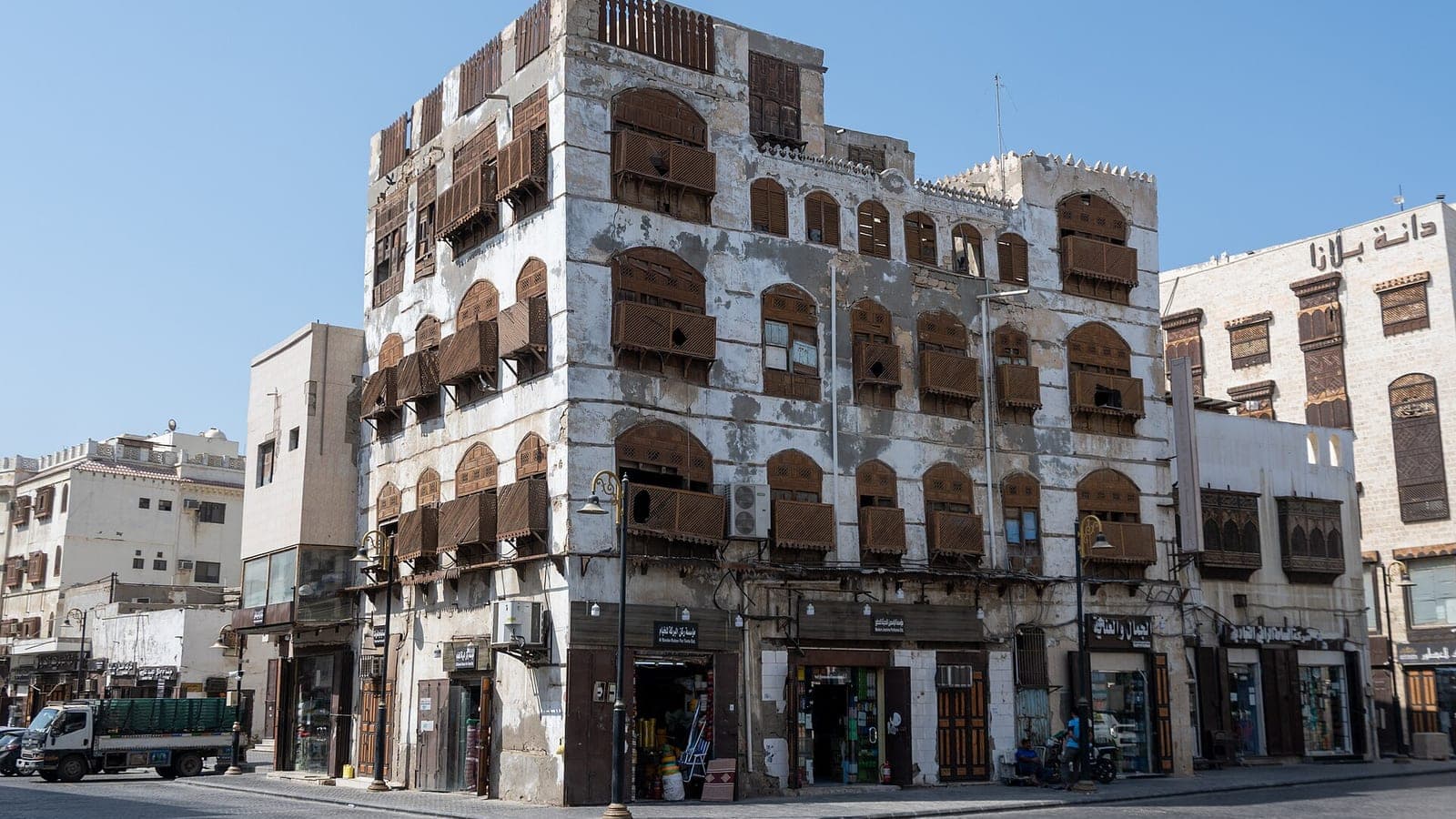
The Red Sea Film Foundation confirmed on Monday that the sixth edition of its festival, booked into the Al-Balad district of Jeddah for 3 to 12 December, has been called off. It returns in the fourth quarter of 2027. No dates have been attached to that quarter, which is itself a piece of information.
The gap, measured properly
Every edition so far has opened within a week of the last one's anniversary: 6 December 2021, 1 December 2022, 30 November 2023, 5 December 2024, 4 December 2025. Four intervals, averaging 365 days.
The fifth interval is 666 days if the 2027 edition opens on the first possible day of the fourth quarter, and 757 if it settles back into December. That is between 1.8 and 2.1 times the gap between any two previous editions. Call it 22 to 25 months.
It is also the second scheduled edition the festival has lost. The Foundation was set up in 2019 and the first festival was meant to run in March 2020, before the pandemic took it off the calendar; the opening night did not happen until December 2021, with Joe Wright's Cyrano.
The statement gives no reason beyond timing. The decision followed "a comprehensive review of a range of considerations relating to the timing of the next edition, including the logistical requirements involved in staging an international event of this scale", the Foundation said, adding that the move "reflects the commitment to ensuring the Festival takes place at the right time and under the right conditions". Variety, The Hollywood Reporter and Deadline all reported it on Monday. Al Arabiya carried the wording too.
That is a sentence doing an enormous amount of work.
What the statement leaves out
Put three dates in order and the year reads differently.
On 14 March, Formula One called off the Saudi Arabian Grand Prix at the Jeddah Corniche Circuit, scheduled for 19 April, citing safety after the outbreak of this year's Iran war. The Bahrain race dropped at the same time was rescued and moved to Sepang. Jeddah's was simply dropped.
On 31 May, Shivani Pandya Malhotra left the Foundation after seven years as managing director, having run all five editions. Variety reported that her way of working had clashed with the plans of Faisal Baltyuor, who became chief executive of the Foundation in May 2025. Deadline's June report on her departure was headlined around questions over the festival's future direction, which now look less like speculation.
On 21 September, the edition went.
Two of Saudi Arabia's flagship international events are therefore off the 2026 calendar, and neither organiser named the war in the announcement. Both reached for scheduling language instead. The region has form here: in October 2023, Egypt's El Gouna festival postponed its sixth edition indefinitely and Cairo called off its 45th, both citing the war in Gaza.
A market of 142 exhibitors, and the year it does not open
The part of this that matters to working producers is the Souk. It began in 2021 with 19 exhibitors, 11 of them Saudi, in two makeshift halls. By 2023 there were 65. By 2024 there were 142, from 32 countries.
Last year's Project Market ran 40 features and series through that room. Anocha Suwichakornpong's Fiction took a $50,000 production award. Mohamed Kordofani's About Love and September Laws and Ibrahim Mursal's Price of Evil took $25,000 development awards apiece. Marie-Clémentine Dusabejambo's Ben'imana took $40,000 in post-production money and a further $32,500 of digital intermediate work in kind. Partner money on top of the Fund's own added roughly another $195,000 in cash and around $265,000 in services, from sound post to world-sales advances.
For a film from the Arab world or from sub-Saharan Africa sitting at development stage, $25,000 decided in a week in Jeddah is often the difference between shooting and not shooting. That is the honest reason a cancelled festival is a story rather than a diary correction. We made the same argument in reverse when Toronto launched a market this month and we costed it out at C$59,000 of public money per buyer: these rooms are expensive to build and they are worth something precise.
The Fund keeps paying, which is not the same thing
The Foundation was careful to say that the Red Sea Fund and the Red Sea Labs continue year-round, and there is no reason to doubt it. The Fund has put $15m into more than 280 films since 2021, which is an average of a little under $53,600 each. Nobody is shutting the cheque book.
But the cheque book was never the whole proposition. A fund writes to projects it already knows about. A market is where it finds the ones it does not, in front of 142 stands, with 40 shortlisted projects pitching and a jury announcing in public on the last night. Jeddah spent five years building that room. It will now sit unused for a year and a half.
There is one consolation for the calendar. The Foundation says its new year-round programming at Culture Square in Historic Jeddah begins in November, a month before the sixth edition would have opened, and the Fund and Labs will keep running through it. Awards season will meanwhile carry on without a December stop in Saudi Arabia for the first time since 2021, which leaves the autumn festivals carrying more weight than usual: Toronto's People's Choice winner already enters the Oscar race with 16 of the last 18 winners having gone on to a best picture nomination.
The sixth edition has a quarter and no date. Anyone planning a 2027 submission has until the Foundation names one.
Reporting this piece draws on
- Variety Red Sea Film Festival Cancels 2026 Edition, Will Return Next Year
- The Hollywood Reporter Red Sea Film Festival Cancels 2026 Edition
- Deadline Saudi Arabia's Red Sea Film Festival Cancels 2026 Edition
- Al Arabiya English Red Sea Film Festival 2026 postponed to fourth quarter of 2027
- Red Sea Film Foundation The Yusr Awards 2025
- Red Sea Film Foundation Red Sea International Film Festival Announces The Winners Of The 2025 Red Sea Souk Awards
- Red Sea Film Foundation Red Sea Fund
- Screen Daily Shivani Pandya Malhotra steps down as managing director of Red Sea Film Foundation
- Deadline Red Sea Film Foundation MD Shivani Pandya Malhotra Departs As Questions Swirl Around Future Direction Of Its Festival
- Screen Daily Egypt's El Gouna film festival postponed indefinitely due to Hamas-Israel war
The writer
Priya Raman — Awards and festivals treated as a campaign beat: strategy, precursor maths, voting bodies and money, from first screening to final ballot.
More from Awards
Elsinore opens the London Film Festival slot that Oscar forgot
The Imitation Game opened the London Film Festival in 2014 and took eight Oscar nominations. The eleven opening films since have taken none. Elsinore, with Andrew Scott tipped for Best Actor, is the first real frontrunner in the slot in twelve years.
Emmys go to Prime Video at $15m a year, a seventh of the Oscars' fee
Amazon will pay about $15m a year for the Emmys from 2027. YouTube committed nine figures for the Oscars. The awards rights market, and the three-year exodus from broadcast, in numbers.
Oscars 2027 festival route adds three films countries passed over
The Academy's first change to how films reach the international feature Oscar in seventy years let in Yellow Letters, Shame and Money and Angh. The other three festival winners were going to be there anyway. Submissions closed on 30 September.