TIFF's market added 130 buyers at C$59,000 each in public money
TIFF: The Market closes today with roughly half the buyers Cannes draws, in a room where they are a denser presence than at Cannes or Berlin.
Divide C$23m by three, then by 130, and you get C$58,974.
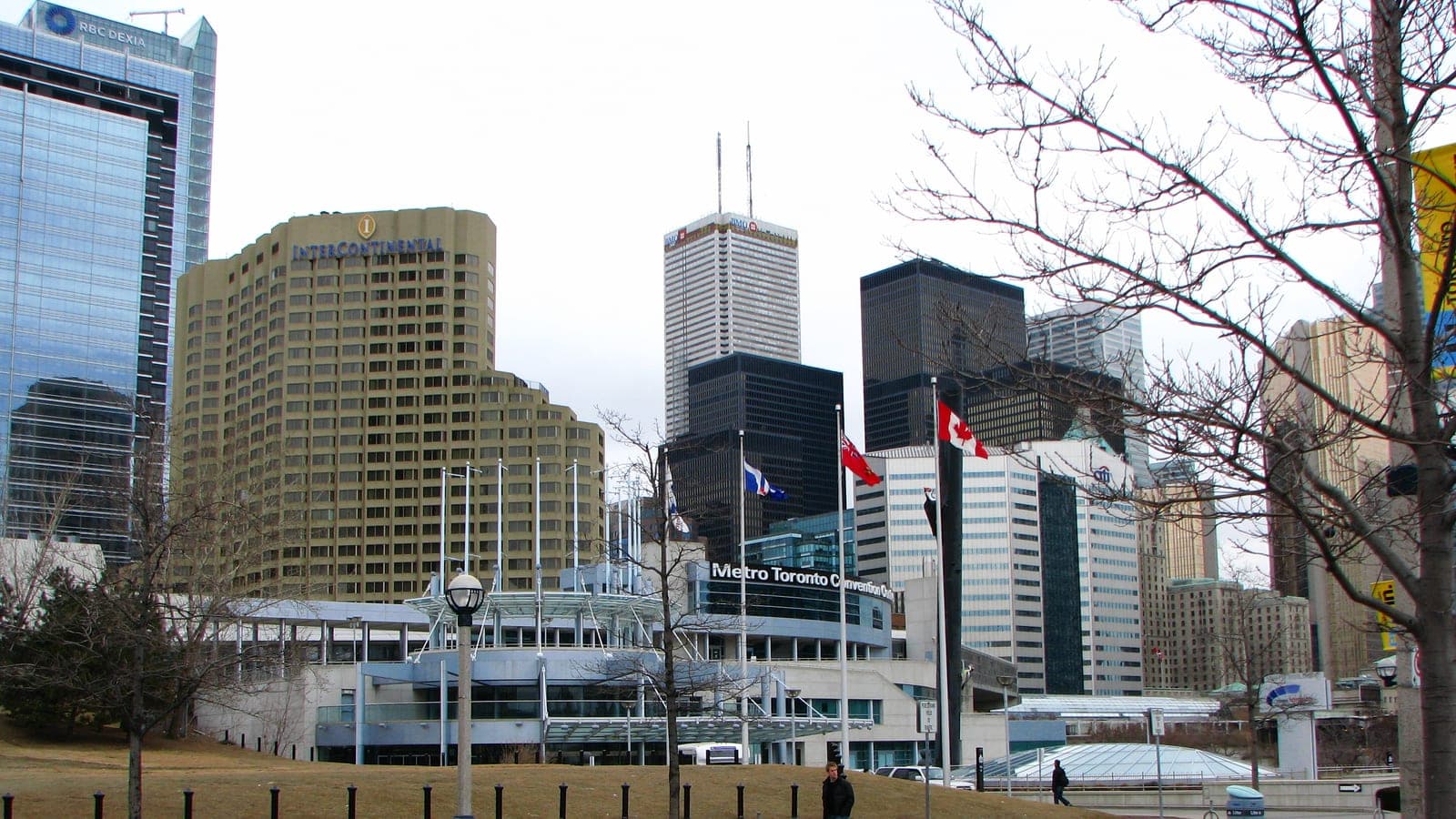
That is the crudest available measure of what Canada has just bought, and it belongs on the table before the closing speeches start. TIFF: The Market finished its first edition today at the Metro Toronto Convention Centre. The federal government is putting C$23m behind it across three years, administered by Telefilm Canada, a sum Screen International put at US$16.9m when the detail was published last December. More than 130 buyers from 49 countries confirmed for the launch edition, out of a pool the market went out and recruited itself.
About C$59,000 a head.
The figure is unfair and I am using it anyway, because nobody else has done the division. The money does not buy buyers alone. It pays for 650 market screening slots, development labs for directors, screenwriters and series creators, an IP exchange, and a seven-day speakers summit. Buyer recruitment is one line in that budget, and the first year of a three-year commitment is the worst possible moment to audit any of it.
Buyers remain the thing a market exists to produce. The rest is scaffolding around the moment somebody signs.
Toronto is now the smallest of the three big markets
Around 800 buyers already came to Toronto every September, before any of this existed, because the premieres were here and so were the sellers. Add the 130 and the festival is working with roughly 930.
Cannes ran 1,700 buyers this year among 16,000 accredited participants from more than 140 countries, with 600 exhibiting companies, a record the Marché du Film reported in May. Berlin's European Film Market, held from 12 to 18 February, drew 1,794 buyers and more than 12,500 professionals and screened 606 films.
Set those side by side and Toronto's buyer count is about 55% of Cannes's and 52% of Berlin's. Its delegate figure of 6,000 is 37.5% of Cannes's. Third place, then, in a calendar where the two established fixtures sit either side of it. That is not a failure. It is simply the thing nobody at the Convention Centre this week has said out loud.
The one number where Toronto beats both
Density.
Six thousand delegates and about 930 buyers works out at one buyer for every 6.5 people in the building. Cannes, on its own figures, runs one for every 9.4. Berlin, the closest of the three, one for every 7.
A smaller room is not automatically a worse room. A seller with eight titles and four days has a finite number of meetings in them, and the useful question is what share of the people walking past the stand can actually write a cheque. On that measure Toronto has assembled the most concentrated market of the year, which is a genuine argument for going, and a better one than anything in the press material.
It is also the argument the market has not made, because delegate headcount is the number that reads well in a funding review.
Where the 800 came from, and why it keeps getting counted twice
The industry analysis site FilmTake reported on 12 September that TIFF had more than 800 buyers in attendance, alongside roughly 6,000 industry attendees and more than 225 exhibitors. Read quickly, that is a triumphant number for a first edition.
It is also the status quo. Screen, setting out the market's plans in December, wrote that more than 250 international buyers were being invited "in addition to the 800 buyers who attend TIFF annually". The 800 is what Toronto managed without a market. Reporting it as the market's haul credits the new thing with the old thing's work.
The honest incremental figure is the 130, and even that comes with a caveat TIFF has not addressed: the festival has not said how many of the 130 had been to Toronto before. Charles Tremblay, head of TIFF: The Market, told Screen in June that the confirmations "reflect a concerted effort to respond to the requests from sellers", which is a description of the recruitment drive rather than an answer about who turned up. Among the names on the list: Picturehouse in the UK, Tanweer in Greece, Cineart in Benelux, Plaion in Germany, Bona Film Group in China and A Contracorriente in Spain. That is a serious list of European and Asian distributors, and it is 130 of the 250-plus invited. A little over half said yes.
For a first edition, a little over half is fine. It is also not 800.
Double it and it is still the third market
TIFF wants 12,000 delegates by 2030, twice this year's target. Berlin passed 12,500 in February. Cannes is at 16,000 now. Toronto's stated ambition for the end of the decade is to reach, four years from now, a size both of its rivals have already exceeded, assuming neither of them grows, which both of them did this year.
My view is that delegate-doubling is the wrong target and always was. The useful metric sits in the same C$23m: how many buyers arrive who would not otherwise have come, and how many of them sign something. This year that is 130 and an unknown. Next year the comparison becomes possible, which is when the money starts being answerable.
There is a version of this story that is about public subsidy chasing an industry that moves wherever the subsidy is, and Canada is hardly alone in it. California lost American Idol to Georgia this year on a worse credit than its own, and Washington is still arguing about a federal film tax credit that Adam Schiff says is close. Toronto's C$23m is a smaller and more precise bet than either: not an attempt to buy production, but an attempt to buy a room.
When the market opened last week, we wrote that the number that would settle it was not attendance but completed sales. That remains true and is still unanswered. The festival itself runs to 20 September, deal announcements typically trail the closing weekend by a fortnight, and the second edition is the first one that can be compared to anything.
Reporting this piece draws on
- Screen International TIFF: The Market teases new details ahead of 2026 launch
- Screen International TIFF: The Market says over 130 buyers confirmed so far for launch edition
- Variety Toronto Film Festival Reveals More Than 130 Buyers to Attend First Edition of Market
- Variety Cannes Film Market Draws Record 16,000 Participants as Japan Surges
- Berlinale European Film Market 2026 Concludes on a Five Percent Increase in Participants
- FilmTake TIFF 2026 Tests Toronto's New Market Role
- CP24 Let's make a deal: TIFF touts its first market, says Canadian creators will benefit
- Stephen Follows Nine takeaways from the 2026 Cannes Marché du Film
The writer
Nell Fairweather — The lead news file and the weekly column: studio decisions, the numbers underneath them, and what they cost the people who have to live with them.
More from News
Vashu Bhagnani's UK company owes £10m, 87% of it to a UAE firm
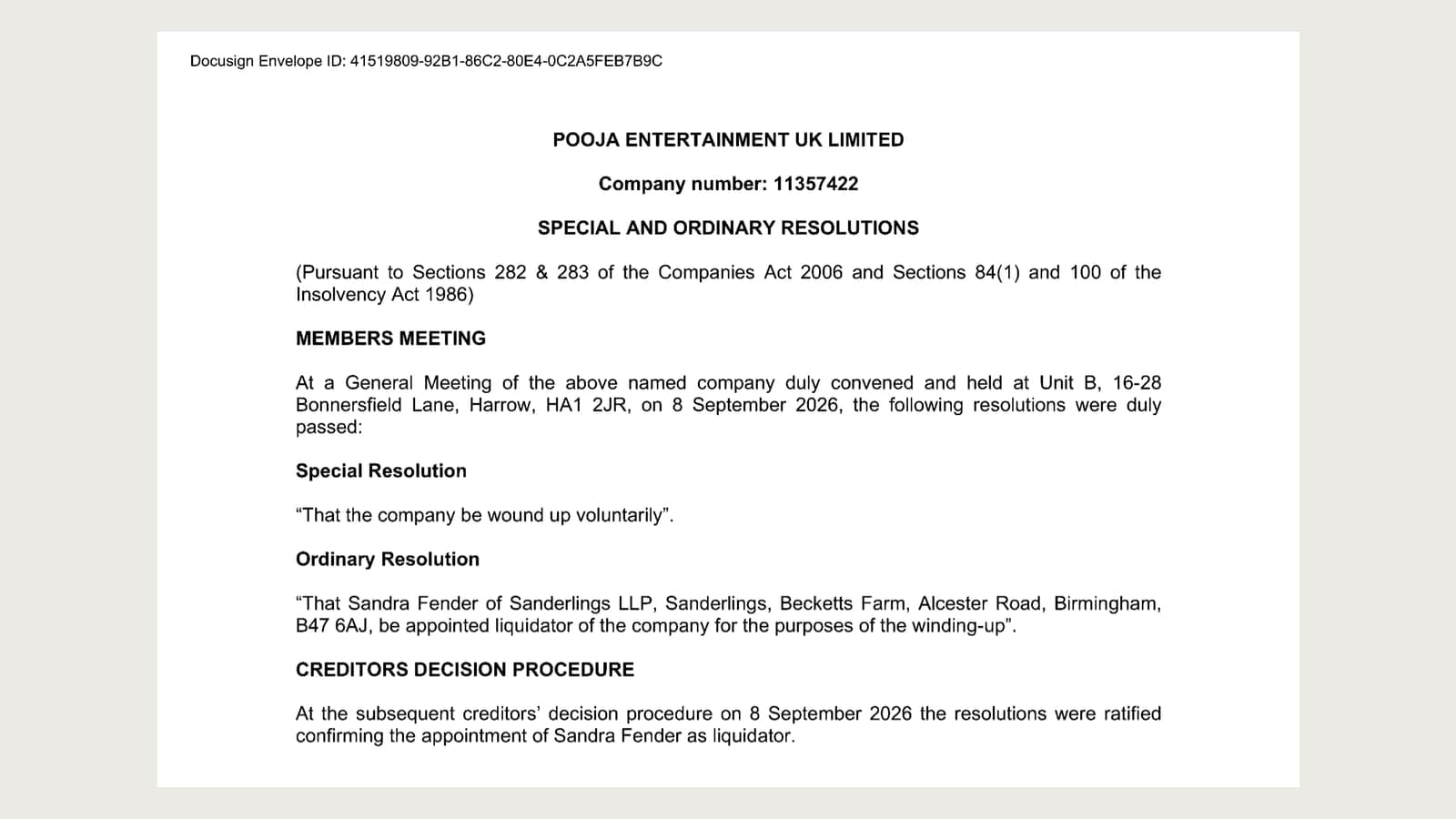
Pooja Entertainment UK Limited's statement of affairs, filed on 17 September, puts its debts at £10,085,267.92. A single creditor in the United Arab Emirates accounts for £8,752,652.35 of it.

Aegon's Conquest is Game of Thrones' 12th spin-off. Two have aired
HBO and Warner Bros have put at least twelve Game of Thrones projects into development since May 2017. House of the Dragon and A Knight of the Seven Kingdoms reached a screen. The twelfth, Aegon's Conquest, is now a film dated for 1 June 2029.
Paramount's 470m Warner warrants strike 17% above its share price
Paramount Skydance will distribute about 470 million warrants with a floor exercise price of $12.00. Its shares closed at $10.28 on Monday. The same filing says the timing of the Warner Bros. Discovery merger, 'if any', is not yet certain.