AI can make a whole film for $2,000. It still can't make you care
From the $2,000 Dreams of Violets to Neill Blomkamp's Seedance short, AI films are here. The jobs at risk are not the ones the headlines assume.
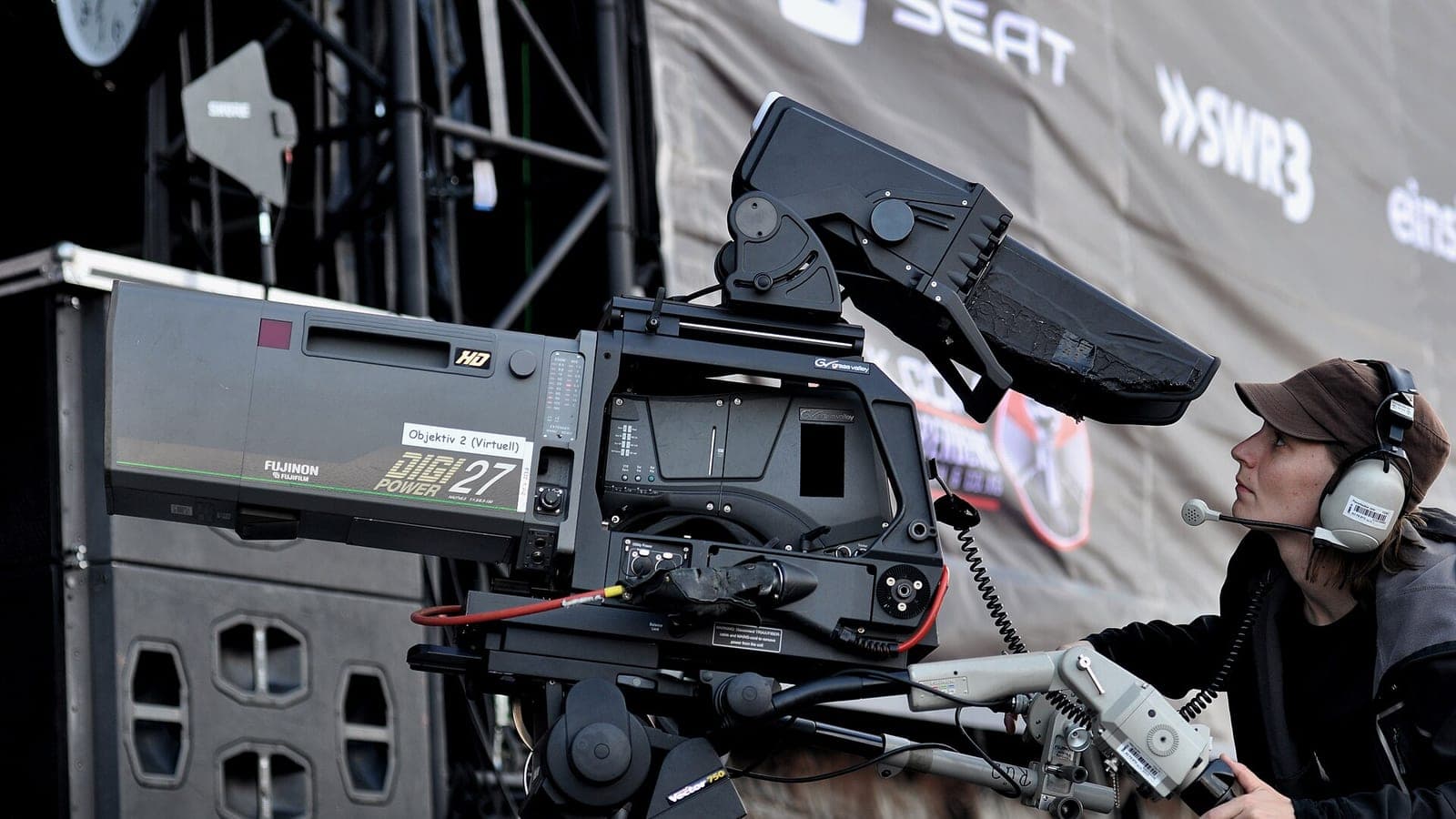
A 75-minute feature called Dreams of Violets premiered at the Tribeca Festival in June. Its makers, brothers Ash and Pooya Koosha, replaced actors, sets and cameras with AI models, and the film was reported to have taken three months and cost $2,000, according to Deadline.
That is the number that frightens people. Not the budget of a blockbuster. The price of a second-hand lens.
The AI films are already here
Dreams of Violets is not an outlier. Higgsfield AI's The Cully Hill Boys, a 110-minute action comedy, was made in four weeks on a $2 million budget, half of it spent on AI processing, Semafor reported. It went straight to YouTube.
Neill Blomkamp, who directed District 9, released a 13-minute science fiction short called Nightborne in July, generated entirely with ByteDance's Seedance 2.0. Thirty-two people licensed their faces and voices for it. "It's now at the point where I want to tackle a full feature in this format," Blomkamp wrote, as World of Reel reported.
Then there was Venice. Be Brave, Francesco Carrozzini's documentary about Diesel founder Renzo Rosso, recreates parts of Rosso's life with AI video. "Not a single frame of Renzo was filmed for this documentary," Carrozzini told Reuters.
So is AI a threat to filmmakers?
For some of them, yes, and pretending otherwise helps nobody.
In early 2024 the Animation Guild and three other creative groups published a study by CVL Economics, based on a survey of 300 entertainment executives. It estimated that 21.4 per cent of film, television and animation jobs in the US, around 118,500 of them, would be consolidated, replaced or eliminated by generative AI by 2026, the guild says. Three quarters of the executives said AI tools had already supported cutting or merging jobs in their division.
The deadline in that forecast is this year. The damage is not evenly spread. The executives expected AI to handle 3D assets, sound design and foreign-language dubbing first, which is the work of junior artists and specialist crew, not of the person whose name goes above the title.
That is the uncomfortable part of the debate. The director with a reputation will be fine. The runner, the junior compositor and the concept artist are the ones whose first paid job is disappearing.
The filmmakers who want no part of it
Guillermo del Toro has said he would "rather die" than use generative AI in his films, most recently to NPR in January. James Cameron, who has spent his career pushing visual effects forward, draws his line at performance. "They can make up a performance from scratch with a text prompt. That's horrifying to me," he told CBS Sunday Morning, Variety reported.
Even careful use gets punished. Darren Aronofsky's On This Day… 1776, made by his studio Primordial Soup with Google DeepMind, used SAG-AFTRA voice actors and a writers room, and still arrived on TIME's YouTube channel in January to a wave of mockery. Steven S. DeKnight, showrunner of Daredevil: Born Again, called it "a complete betrayal of cinema", CineD reported.
What the machine still cannot do
Here is the case the doom merchants skip. Every film in this piece has a human at the centre making the decisions that matter.
The Koosha brothers chose to tell a story drawn from decades of Iranian civilian resistance. Blomkamp directed Nightborne prompt by prompt. Carrozzini decided to invent a childhood that Rosso had never been photographed in, and Rosso said it brought tears to his eyes. "Creativity is absolutely not replaced by the machine. Human beings remain fundamental," he told Reuters.
AI makes footage cheap. It does not make judgement cheap, or taste, or the reason a story needs telling now. A model trained on everything drifts towards the middle. Audiences feel it. A Gallup poll cited by Semafor found 55 per cent of Americans think AI makes creative work worse.
So will it make filmmakers more creative? It will make more filmmakers. A $2,000 feature is a threat to a crew, but it is also a door for someone in Tehran, Lagos or Leeds with a story and no financier. The filmmakers in real danger are the ones whose work was already average, because average is now the cheapest thing in the world to produce.
Lorenzo Mieli, a producer of Be Brave, put the obligation plainly. "We need to regulate it, control it, prevent exploitation and prevent the disappearance of professions."
What happens next
The rules are hardening. From the 99th Academy Awards, performances must be given by humans and screenplays must be human-authored, as we set out in our guide to AI and the law. The market test is still to come. OpenAI-backed Critterz, the AI-assisted family feature, had not announced distributors when its sales launched at the Cannes market in May, and Blomkamp's full AI feature does not yet have a release date. The first AI-made film that asks audiences to pay for a cinema ticket will answer the question this debate keeps dodging.
Reporting this piece draws on
- Deadline AI-Generated Drama 'Dreams Of Violets' To Premiere At Tribeca Festival
- Semafor AI startup produces fully AI-generated feature-length film
- World of Reel Neill Blomkamp's Next Movie Could Be Fully AI-Generated
- Reuters AI-powered documentary tests cinema's boundaries in Venice
- The Animation Guild AI and Animation
- NPR Filmmaker Guillermo del Toro says 'I'd rather die' than use generative AI
- Variety James Cameron Says It's 'Horrifying' that AI Can 'Make Up an Actor'
- CineD Darren Aronofsky's AI Series 'On This Day… 1776' Debuts to Brutal Backlash
- Semafor Filmmakers tout AI's use in Hollywood at the other film festival in Venice
The writer
Marcus Dey — Deals, development and the people who move between them, written for readers who want to know why a project exists at all.
More from News
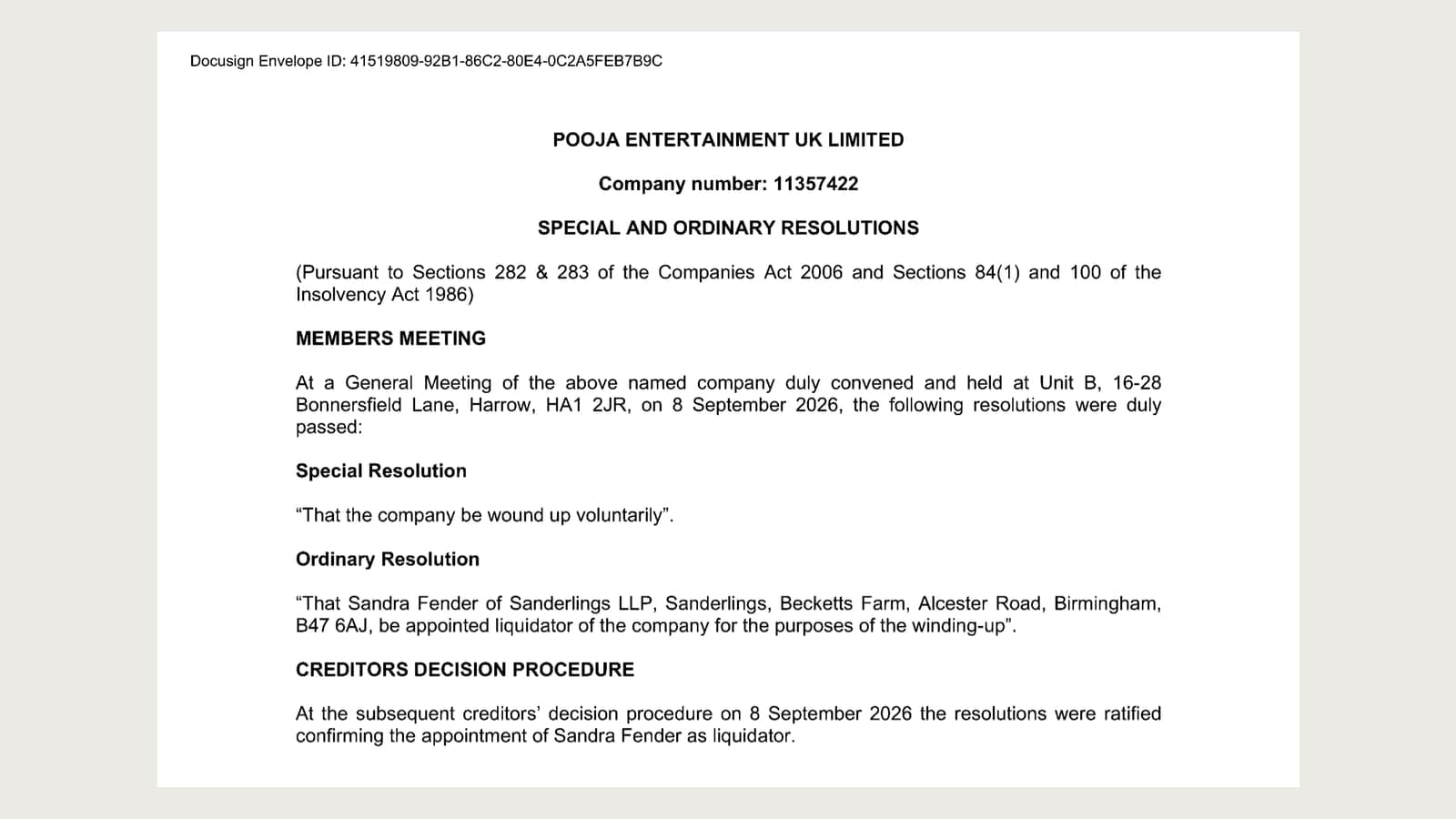
Vashu Bhagnani's UK company owes £10m, 87% of it to a UAE firm
Pooja Entertainment UK Limited's statement of affairs, filed on 17 September, puts its debts at £10,085,267.92. A single creditor in the United Arab Emirates accounts for £8,752,652.35 of it.
Aegon's Conquest is Game of Thrones' 12th spin-off. Two have aired
HBO and Warner Bros have put at least twelve Game of Thrones projects into development since May 2017. House of the Dragon and A Knight of the Seven Kingdoms reached a screen. The twelfth, Aegon's Conquest, is now a film dated for 1 June 2029.

Paramount's 470m Warner warrants strike 17% above its share price
Paramount Skydance will distribute about 470 million warrants with a floor exercise price of $12.00. Its shares closed at $10.28 on Monday. The same filing says the timing of the Warner Bros. Discovery merger, 'if any', is not yet certain.