The brothers who invented a film in a £1m HMRC tax fraud
Craig and Carl Rees set up production companies, forged the paperwork and claimed relief on films that were inflated or never made, trying to take around £1m from HMRC before a British Film Institute referral exposed them.

British film tax relief exists to put public money into real productions. Two brothers from Warwick decided to claim it on a film that did not exist.
Craig and Carl Rees set up film production companies and handed HMRC forged documents claiming fictional spending on studios, sound recording and catering. Across three projects, named in court as Whispers, The Eight and Violence, they inflated the claims on one, invented a second that was never made at all, and used a third, shot in the United States, to generate still more claims. Over four years from October 2011 they sought £542,840 in Film Tax Relief and £484,933 in VAT repayments, a little over £1m in all, and were paid more than £367,000 before the fraud unravelled.
Caught by the BFI
What exposed them was not a tax audit but the film industry itself. The British Film Institute, which certifies productions as British for the purposes of the relief, referred the brothers to HMRC, whose Fraud Investigation Service built the case. After an 18-week trial at Birmingham Crown Court, both men were found guilty in March 2024 of two counts of conspiracy to cheat the public revenue.
"Film Tax Relief is there to help genuine, honest film companies produce brilliant British films, but these brothers thought they could play the system for personal gain," said Mark Robinson, an operational lead in HMRC's Fraud Investigation Service. The sentencing judge, Her Honour Judge Heidi Kubik KC, called it "staggering and audacious dishonesty." Each brother was jailed for seven years and banned from acting as a company director for 15.
Two years, undone by an email
By the time those sentences were handed down in April 2024, Craig Rees was gone. He had absconded partway through the trial to avoid cross-examination, and was sentenced in his absence while his brother told the court he was in Ukraine. He stayed at large for more than two years.
The end, when it came, was almost comic. Rees was arrested in the Czech Republic in March 2026 after, as HMRC told it, he sent an email insisting he had no access to a phone. The message carried an automatic signature: sent from his iPhone. Extradited back to Britain, he returned to Birmingham Crown Court in May 2026 to begin the seven-year term imposed in his absence, with a further six months added, to run consecutively, for the bail offence.
Why the relief is a target
The Rees case is small against the sums in Britain's bigger film-finance disputes, where HMRC has spent years in the tribunals over partnership schemes worth hundreds of millions. What makes it instructive is how plainly it worked, and how it was caught. The relief pays out against declared production spend, so a fraudster's task is to manufacture convincing spend, which is what forged invoices for studios and catering are meant to do. The check in the system is certification: a production has to be verified as genuinely British, and it was that gateway, through the BFI, that flagged films which in one case had no footage behind them at all. The brothers gambled that nobody would look closely at a movie nobody would ever see. Someone did.
Reporting this piece draws on
The writer
Joe Brandt — The Grapevine: what the industry is saying, who is unhappy, and which official statements are doing the most work. Attributed, always.
More from News
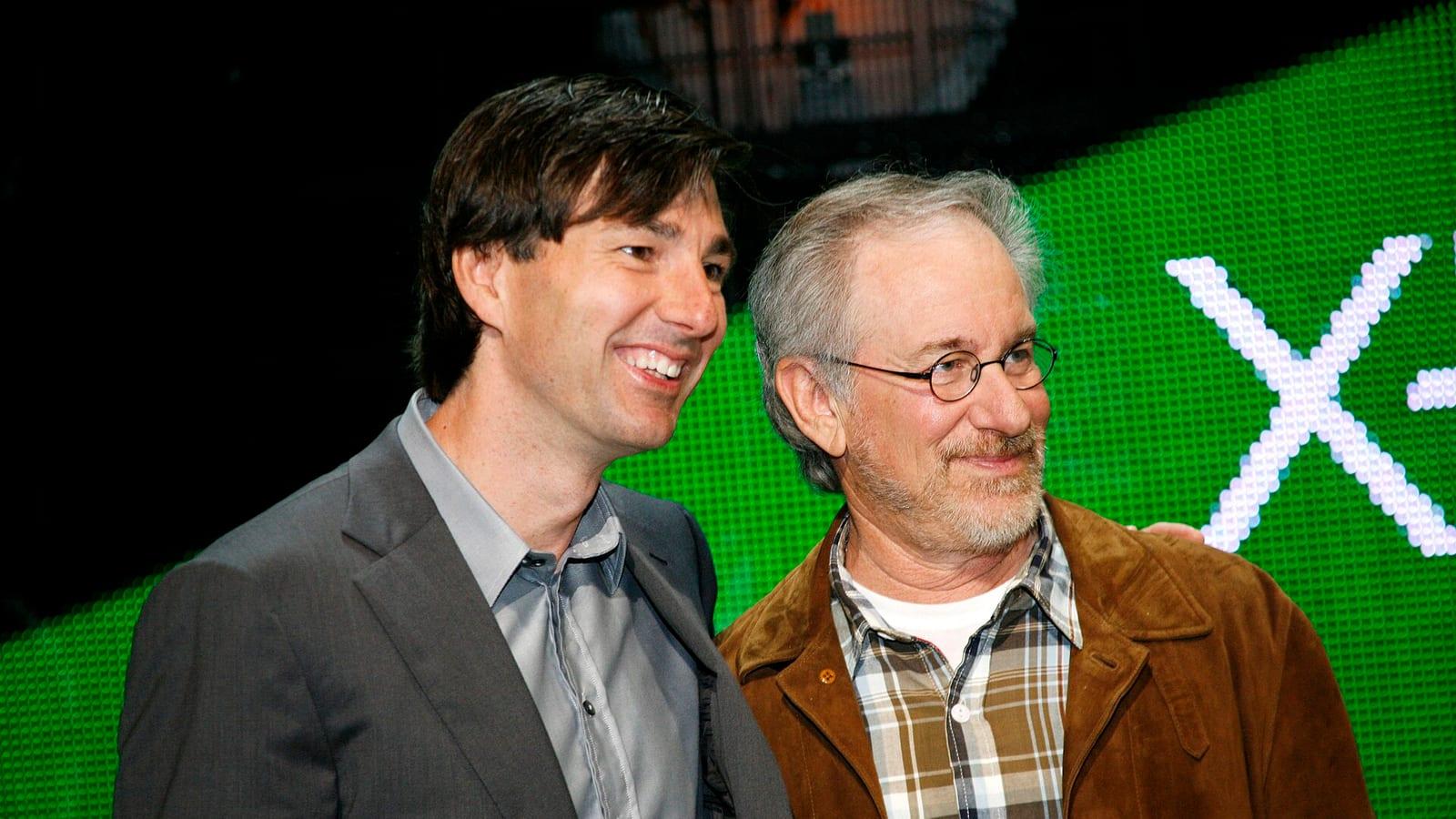
Spielberg is developing his first Western, with a hoped-for 2027 shoot
Steven Spielberg has directed across nearly every genre for more than half a century, but never a Western. That is about to change: the 79-year-old is developing an untitled Western he first teased at SXSW, and his longtime cinematographer Janusz Kaminski has indicated the plan is to shoot it in 2027. Title, cast and studio are still unknown.

Filmmaker Arman Khan warns his social media and WhatsApp were hacked
UK-based filmmaker Arman Khan has warned friends and followers that his social media accounts, WhatsApp and email were hacked and that he has lost access to his PC, telling anyone who hears from him to ignore the message. The public notice is a standard precaution against account takeovers, which turn a victim's own contacts into the next targets.

The boiler room that raised $21m for a Wizard of Oz film never made
Gigapix Studios pitched itself to ordinary investors as the next Pixar, raising money for a 3-D animated Wizard of Oz film called OZ3D and an imminent stock-market float. Telemarketers took about $21m from some 730 people, many of them elderly or unwell. Less than 5 percent reached the film, which was never made. Founder Christopher Blauvelt was sentenced to eight years.