Ben Affleck used AI for lots of things in Animals. He won't say which
The thriller arrived on Netflix on 9 October, seven months after the streamer bought the director's 16-person AI company InterPositive for $587m, or $36.7m an employee.
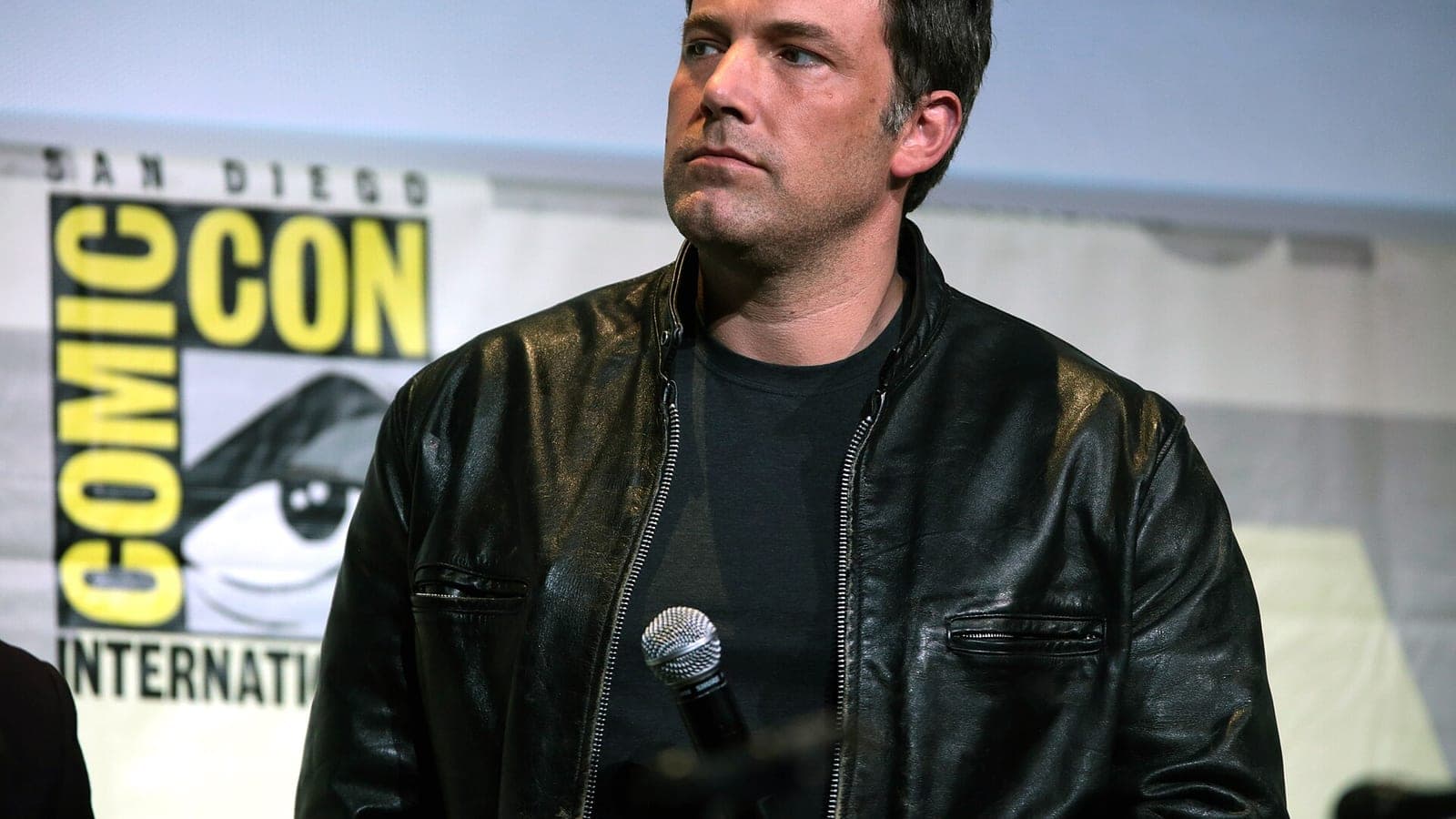
Netflix's quarterly securities filing prices InterPositive, the filmmaking AI company Ben Affleck founded in 2022, at approximately $587 million in cash, Variety reported. The company had 16 employees, per Variety's coverage of the deal, which works out at $36.7 million a head. On Friday, the first film on which Affleck admits using those tools arrived on the service that bought them.
Animals is a kidnapping thriller with Affleck directing, co-writing and starring as a Los Angeles mayoral candidate whose son is taken on Halloween night, with Kerry Washington as his wife and Gillian Anderson and Steven Yeun around them. It reached Netflix and a limited run of cinemas on 9 October, and by Saturday it sat at 36 per cent from 47 reviews on Rotten Tomatoes, with the audience score a shade kinder at 42. For a film carrying this much of Netflix's technology strategy on its back, those are difficult numbers.
The strategy is the more interesting story, because Affleck has been explaining it in public, in stages, for two years, and the stages only make sense once you put dates on them.
What he said in 2024, and what he was building
At Bloomberg's Screentime conference in Los Angeles on 30 September, nine days before release, Affleck told interviewer Lucas Shaw that he used AI "for lots of things in that movie", Deadline reported. Which things, he would not say. "I'm a little bit hesitant to point out what they are," he said, because "we're trying to foster the illusion of reality". He compared disclosure to a magician explaining a trick before performing it, and called Animals "a very human movie".
The speech that made him the industry's favourite AI sceptic came in November 2024, at CNBC's Delivering Alpha conference, an event for investors rather than film people. "AI is a craftsman at best," he said there, reported by Fortune: it could produce excellent imitative verse, but it could not write Shakespeare, and movies would be among the last things to go if anything got replaced at all. The clip travelled for months as proof that somebody in Hollywood understood the technology well enough not to fear it.
He was, at that moment, two years into running an AI company of his own. 2022 was the year Affleck went into business twice, founding Artists Equity, the production company he started with Matt Damon, and InterPositive, where he served as chief executive. And the rest of that 2024 answer, the part that travelled less, was specific about where AI would actually land: on the laborious, costly, less creative parts of filmmaking, lowering the price of making things. That is not a contradiction of what he sold Netflix sixteen months later. It is a product description.
Netflix announced the purchase on 5 March, with the full 16-person team of engineers, researchers and creatives moving across and Affleck staying on as a senior adviser. Nobody named a price that day; Variety was told terms were not being disclosed. Bloomberg's sources put the deal at up to $600 million, with part of the money tied to performance targets, and $600 million is the figure plenty of headlines still carry. The securities filing months later said $587 million in cash. Both numbers are real. Only one is what Netflix paid on the day.
What $36.7 million a head buys
InterPositive does not make the type-a-sentence, receive-a-film technology the phrase "AI movie" suggests. Its system builds a model from a production's own dailies, the footage the shoot has already paid for, and puts it to work afterwards: relighting shots, repairing footage, effects work that would otherwise mean a reshoot or a visual effects invoice. Netflix says it will offer the tools to its own creative partners and has no plans to sell them commercially. That detail is the tell. This is not a product Netflix wants to run. It is an advantage it wants to keep in the building.
There is company at this end of the market. James Cameron bought Outsyders, an AI 3D-conversion firm, earlier this year, as we reported, and Netflix has said around 300 of its titles have already used generative AI in some form, a figure from our survey of Hollywood's AI year. The direction of the money is not in question. The disclosure is.
The magician defence
Affleck's argument for secrecy has an internal logic. Film is an illusion and nobody itemises the wigs. The Hollywood Reporter's account of the Screentime conversation has him framing AI as one more stage in a century of technical change in film and television.
The trouble is that a magician's audience bought a ticket to be fooled, and a thriller's audience did not. Slashfilm's review said that knowing AI was used somewhere coloured the whole viewing, and that the film disappoints even with the question set aside. Affleck has built the most defensible version of this technology anyone in the business has described, a system trained on his own production's footage rather than on other people's work. Declining to say where it was used throws that advantage away and hands the argument to whoever assumes the worst.
There is a working model for the other approach, from a director with just as much to lose. Danny Boyle confirmed there are roughly 30 seconds of generative AI in Ink, the film that opened this year's Venice Film Festival, and itemised them: a couple of animated photographs, and mice in a 1970s newsroom. The admission was a one-day story. Ink streams on Netflix from 8 January, which gives the company two films, three months apart, running opposite experiments on the same audience: one that showed its workings, and one that used AI for lots of things and will not say which.
Reporting this piece draws on
- Variety Netflix Paid $587 Million for Ben Affleck's AI Startup InterPositive
- Variety Netflix Acquires Ben Affleck's AI Filmmaker Tools Start-Up InterPositive
- Deadline Ben Affleck Used AI For "Lots Of Things" In Netflix's 'Animals'
- The Hollywood Reporter Ben Affleck Used AI "For Lots of Things" in His New Netflix Movie 'Animals'
- Fortune Ben Affleck on AI in Hollywood filmmaking
- Netflix Innovation for Filmmaking, By Filmmakers: Why InterPositive Is Joining Netflix
- Engadget Netflix just bought an AI startup founded by Ben Affleck
- Rotten Tomatoes Animals (2026)
- /Film Animals Review: Ben Affleck's Netflix Thriller Isn't Very Thrilling
The writer
Marcus Dey — Deals, development and the people who move between them, written for readers who want to know why a project exists at all.
More from Streaming

HBO Max has been renamed twice in six years. Now comes a merger
Skydance closed its $110bn Warner Bros. Discovery takeover on Tuesday and spent Wednesday declining to name, date or price the single app it says is coming. The Max name lasted 778 days. The restored HBO Max name is 455 days old.
Cindy Holland lasted 418 days at Paramount. HBO's Bloys inherits it
Holland ran Paramount's direct-to-consumer business for 418 days. Casey Bloys has run HBO's programming for roughly 3,800, which is longer than Paramount+ has existed. A judge cleared the merger on Wednesday.
Bob Chapek defends his price rises as Disney+ hits $21.49 a month
The last Disney+ price rise Chapek approved took effect eighteen days after the board sacked him. It put the ad-free tier at $10.99. On Wednesday it reached $21.49, and the gap between the ad-free and ad-supported plans has tripled to exactly $9.00.