James Cameron buys AI 3D firm Outsyders. The saving is in people
Lightstorm Vision's second acquisition in fifteen weeks converted most of Lilo & Stitch in eight, a turnaround the hand-built conversion business was already hitting in 2012.
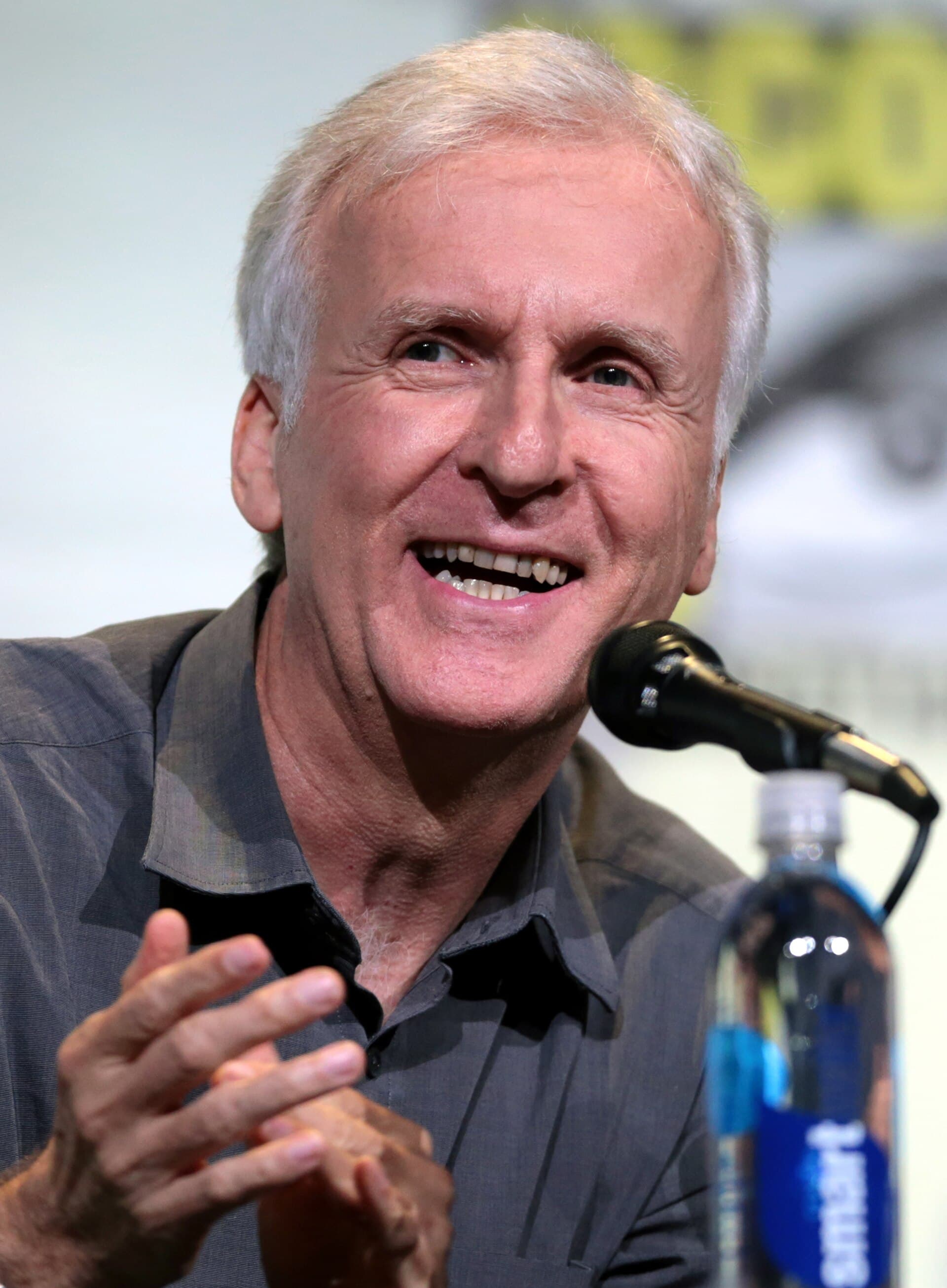
James Cameron spent 60 weeks and $18m turning Titanic into a 3D film. The company he has just bought says it did most of Lilo & Stitch in eight.
Lightstorm Vision, the technology company Cameron founded to sell the stereoscopic kit he developed for the Avatar pictures, said on Wednesday that it has acquired Outsyders, a conversion house whose machine learning pipeline reads depth out of flat footage and builds a stereo version from it. Terms were not disclosed. It is the second company Lightstorm Vision has bought in fifteen weeks, after the Munich rig manufacturer Stereotec on 2 June, and the pair of deals describes a plan rather than a shopping habit: own the cameras that capture depth, own the software that infers it, and sell studios the whole pipeline instead of a service.
The arithmetic is worth doing, partly because Cameron supplied the benchmark himself. Titanic runs 195 minutes, and Stereo D, the vendor that led the conversion, spent those 60 weeks working through more than 260,000 frames, TheWrap reported around the 2012 re-release. Call it two days of calendar time for every minute of finished film. Outsyders handled most of Lilo & Stitch, which runs 108 minutes, in eight weeks, or roughly half a day a minute. Four times quicker, on Cameron's own numbers.
The eight weeks are not the interesting part
This is where the comparison stops flattering anybody. That same TheWrap piece reported that Titanic took more than double the six weeks a conversion typically ran at the time, which means the hand-built industry standard of 2012 was already turning a feature around faster per minute than the eight weeks Outsyders needed on Lilo & Stitch. Titanic was slow because Cameron made it slow, reviewing depth frame by frame from his house in Malibu and telling anyone who asked that "converting a film to 3D is not a magic wand" and that "you have to create everything".
So the speed claim, taken on its own, is marketing. The number that moved is the other one.
Stereo D put around 300 artists on Titanic, the Hollywood Reporter reported when Cameron previewed the conversion, though the company's own announcement for that April's NAB Show in Las Vegas put the figure at 450, working across 279,360 frames. Take the lower number. It is still a department. Outsyders, describing its work on the IMAX documentary Blue Angels, said last September that it had converted a full feature with an "exceptionally small crew", and the language in Wednesday's announcement is the same: the combined company will let "small, highly skilled teams" produce stereoscopic content at "significantly lower cost than traditional conversion methods". Conversion has not become dramatically faster. It has become dramatically cheaper per finished minute, because there are fewer people in the room.
Outsyders was founded in April 2024 by Paul Becker, who is chief executive, with Jared Sandrew and Chris Harvey, all three out of senior jobs at DNEG, Unity, Disney and Industrial Light & Magic, as Animation World Network noted. Its credits since include Blue Angels, Disney's Tron: Ares and Moana, Doug Liman's XR piece Asteroid and Cameron's own Billie Eilish concert film in 3D, which is how the two sides met. "At Lightstorm we've been working with Paul Becker and his team for almost two years," Cameron said in the announcement, carried by Variety. "I've got a very exacting eye for 3D, and I can confidently say that their work and their AI tools are world class."
What Cameron has said, and when
The dates matter.
On 24 September 2024 he joined the board of Stability AI, whose chief executive Prem Akkaraju announced it with the line that Cameron "lives in the future and waits for the rest of us to catch up". On 11 April 2025, on the Boz to the Future podcast, he argued that blockbusters had to cut the cost of visual effects in half to survive, and he was specific about the mechanism, telling Variety it meant "doubling their speed to completion on a given shot" rather than, as Deadline put it in its headline that day, "laying off half the staff". On 30 November 2025, talking to CBS Sunday Morning before Avatar: Fire and Ash opened, he called generative AI that invents a performance from a text prompt "horrifying", per TechCrunch, and said none of it went into the film. Then, on 16 September 2026, he bought an AI company.
The distinction Cameron draws is real and deserves stating fairly. A model that estimates how far a pixel sits from the lens is not a model that writes a scene or fabricates an actor, depth inference sits closer to rotoscoping than to invention, and nobody's likeness is at stake in a stereo pass. But "halve the cost without laying anyone off" and "small, highly skilled teams instead of 300 artists" are awkward sentences to hold at the same time, and Lightstorm has now put money behind the second one.
The business underneath the announcement
None of this is really about Lilo & Stitch. The pitch to studios and streamers, stated plainly in Wednesday's announcement and in Deadline's account of it, is library conversion at scale: take a catalogue of 2D films and reissue them in 3D for cinemas, for Meta's headsets, and for whatever comes after those. Lightstorm says its tools have supported more than 80 films and over $15bn in worldwide box office, a claim worth treating as the marketing it is.
Stereotec, the June purchase, does the other half. Founded by Florian Maier, it builds the precision rigs that shoot in native 3D and has supplied on-set work for Gemini Man and Dune: Part Two, according to TVBEurope. Cameron is not assembling a vendor. He is assembling a format.
It is the same logic Netflix followed when it spent $587m on AI production tools, and the same direction of travel that now lets a single person finish a film for about $2,000. The money goes into the pipe, not the picture.
Cameron's own films remain the exception he has carved out for himself. Avatar: Fire and Ash has taken $1.49bn worldwide against a budget reported at $350m to $400m, and he spent its entire press run insisting that no generative AI touched it. Avatar 4 is booked for 21 December 2029, which leaves three years to find out whether that promise still holds inside a company that by then will own the cameras, the rigs and the conversion models.
Reporting this piece draws on
- Variety James Cameron's Lightstorm Scoops Up AI-Powered 3D Tech Company Outsyders
- Deadline James Cameron's Lightstorm Vision Acquires 3D Tech Collective Outsyders
- Animation World Network James Cameron's Lightstorm Vision Acquires Outsyders 3D Conversion Studio
- TVBEurope James Cameron's Lightstorm Vision unifies 3D production with STEREOTEC acquisition
- TheWrap 'Titanic 3D': How James Cameron Became a Convert to 3D Conversion
- The Hollywood Reporter James Cameron Previews 18 Minutes of $18 million 3D Conversion of 'Titanic'
- EDN (Stereo D / NAB Show announcement) 2D to 3D Conversion of 'TITANIC' to be Featured in Creative Master Series at 2012 NAB Show
- Auganix Outsyders Announces Completion of IMAX, Disney, XR Projects
- Stability AI James Cameron, Academy Award-Winning Filmmaker, Joins Stability AI Board of Directors
- Variety James Cameron Says Blockbuster Movies Need AI to 'Cut the Cost in Half'
- Deadline James Cameron Wants To Use AI To "Cut The Cost" Of Filmmaking Without "Laying Off Half The Staff"
- TechCrunch Avatar director James Cameron says generative AI is 'horrifying'
The writer
Marcus Dey — Deals, development and the people who move between them, written for readers who want to know why a project exists at all.
More from News
Skydance's Warner debt costs six times what its studios earn
Skydance closed its purchase of Warner Bros. Discovery on 6 October and filed the bond schedule the same day. Multiply each principal by its coupon and the fixed-rate notes cost $3.22bn a year. Warner's and Paramount's film studios earned $132m between them in the most recent quarter either reported.
The Batman Part II has slipped 868 days. Now filming has stopped
The Batman Part II is booked for 18 February 2028, which is 2,177 days after the first film opened. No Batman film has made its direct sequel wait that long, and the schedule has now moved three times before a camera stopped rolling.
De Luca and Abdy exit Warner with one earner from six auteur bets
Mike De Luca and Pam Abdy handed six famous directors a budget and no franchise to hide behind. Those six films cost between $653m and $733m to produce and have grossed $959.7m worldwide. Only Sinners made money.